For homeowners
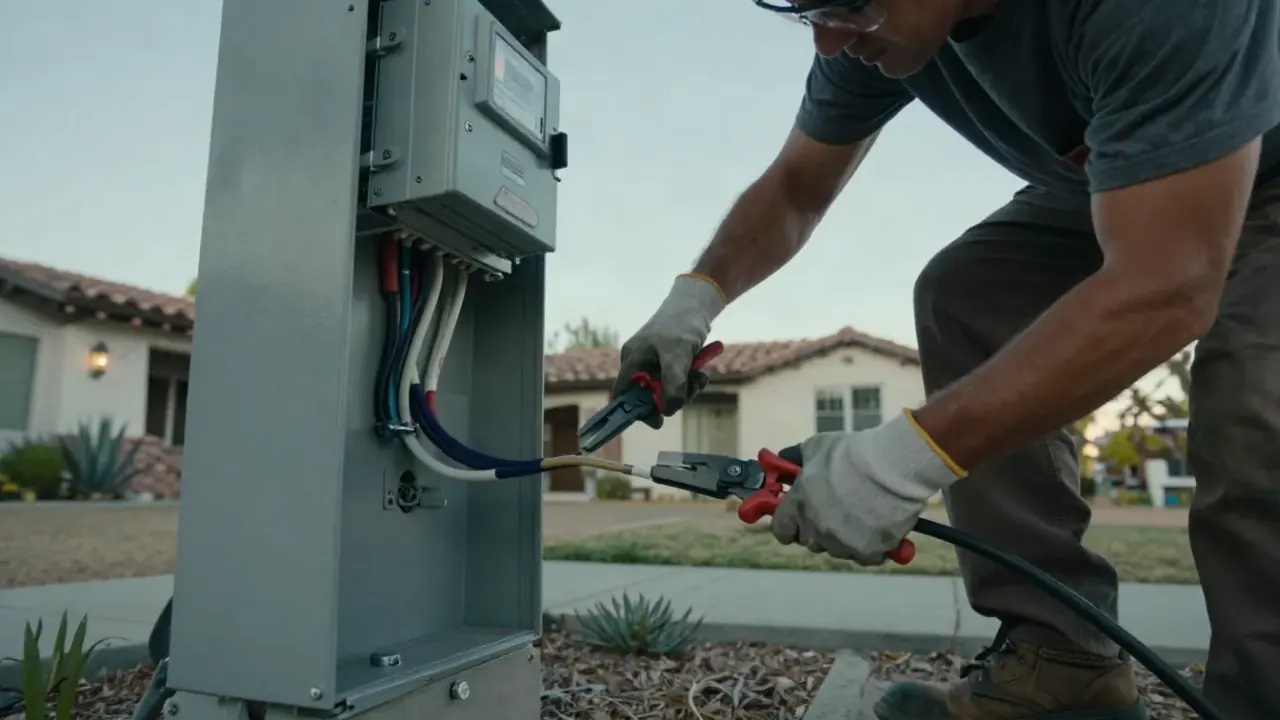
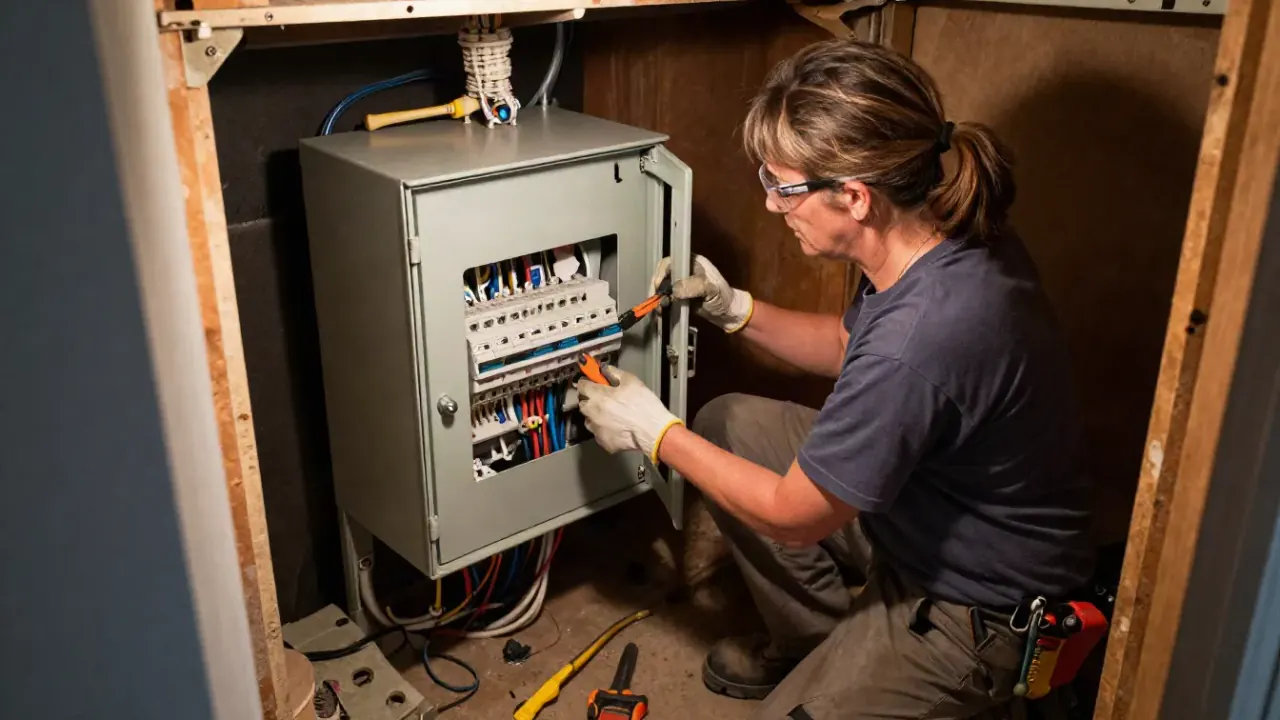
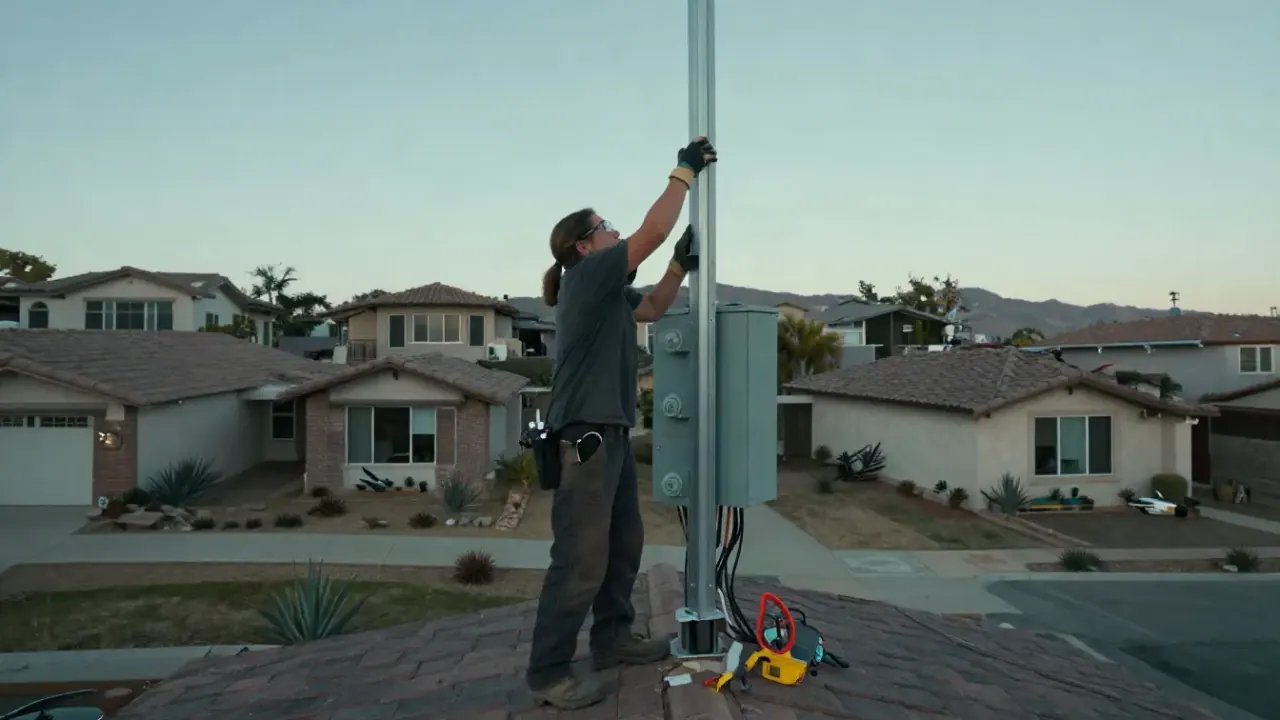
We upgrade your service so the EV charger and the solar array both have room. You get the load math in writing before we start.
- Charger breaker added
- Solar backfeed space labeled
- AFCI and GFCI installed
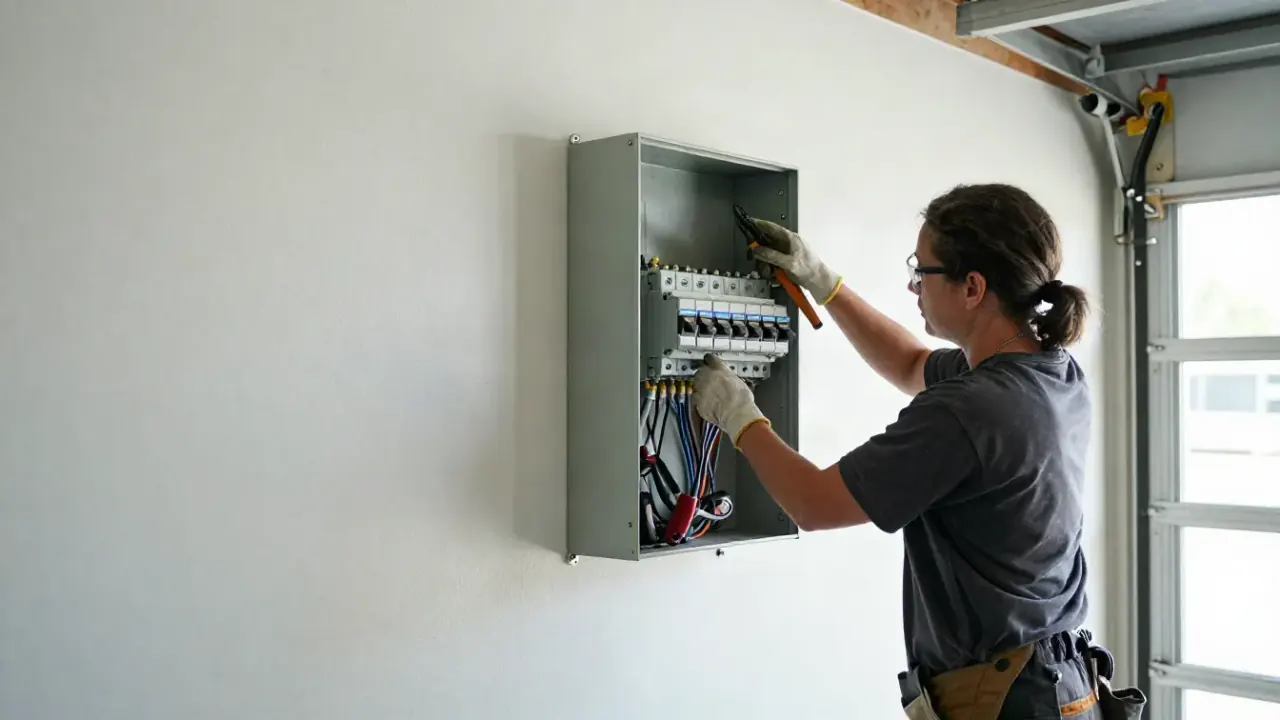
EV-ready and solar-ready panel upgrades Upland CA give you the capacity, breaker space, and code-correct wiring to add a Level 2 charger and rooftop solar without tearing the wall open twice. We handle the load calculation, the permit, and the inspection. If you are buying an EV this year or getting solar quotes, this is the upgrade that keeps both projects moving.
 Load calculationPanel labelingTorque check
The service covers the panel, the breakers, the permit, and the documentation your solar contractor needs. It does not cover the charger hardware itself or the solar panels, which you or your installer supply.
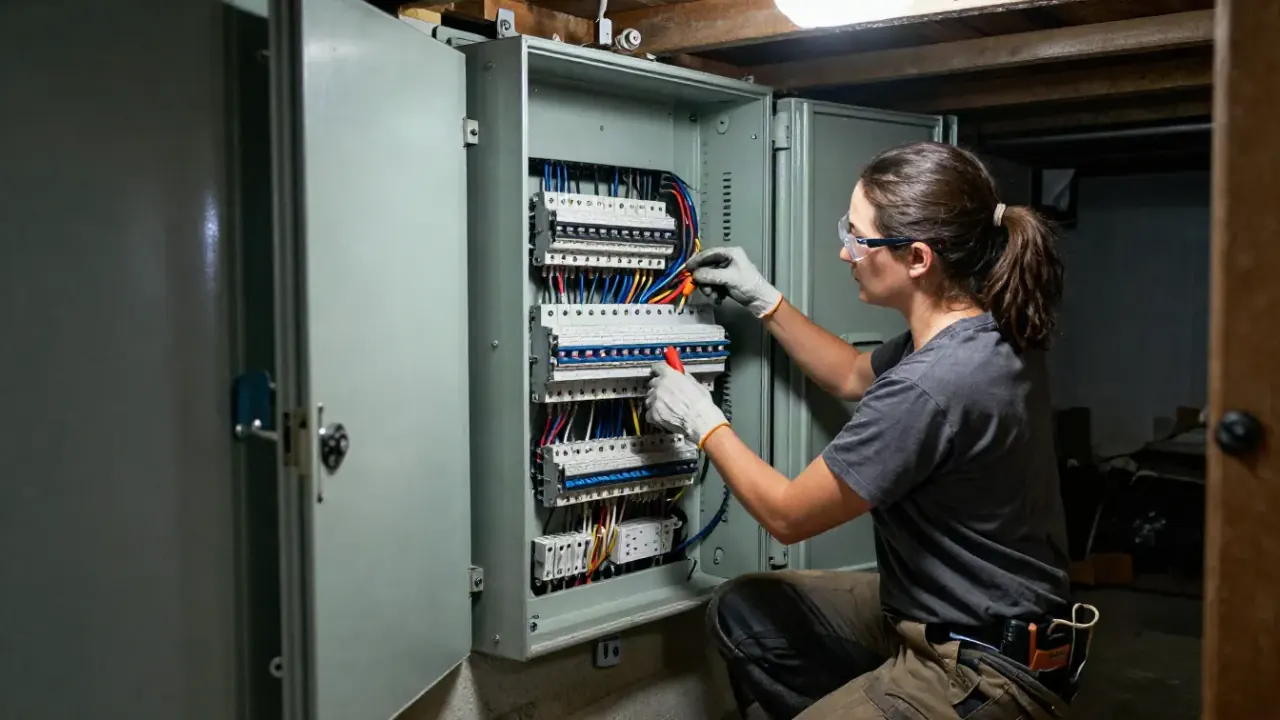
A UL-listed Square D, Eaton, or Siemens panel sized to your load calculation, typically 200 amps for a single EV and solar plan. We mount it, land the circuits, and torque every lug to manufacturer spec.
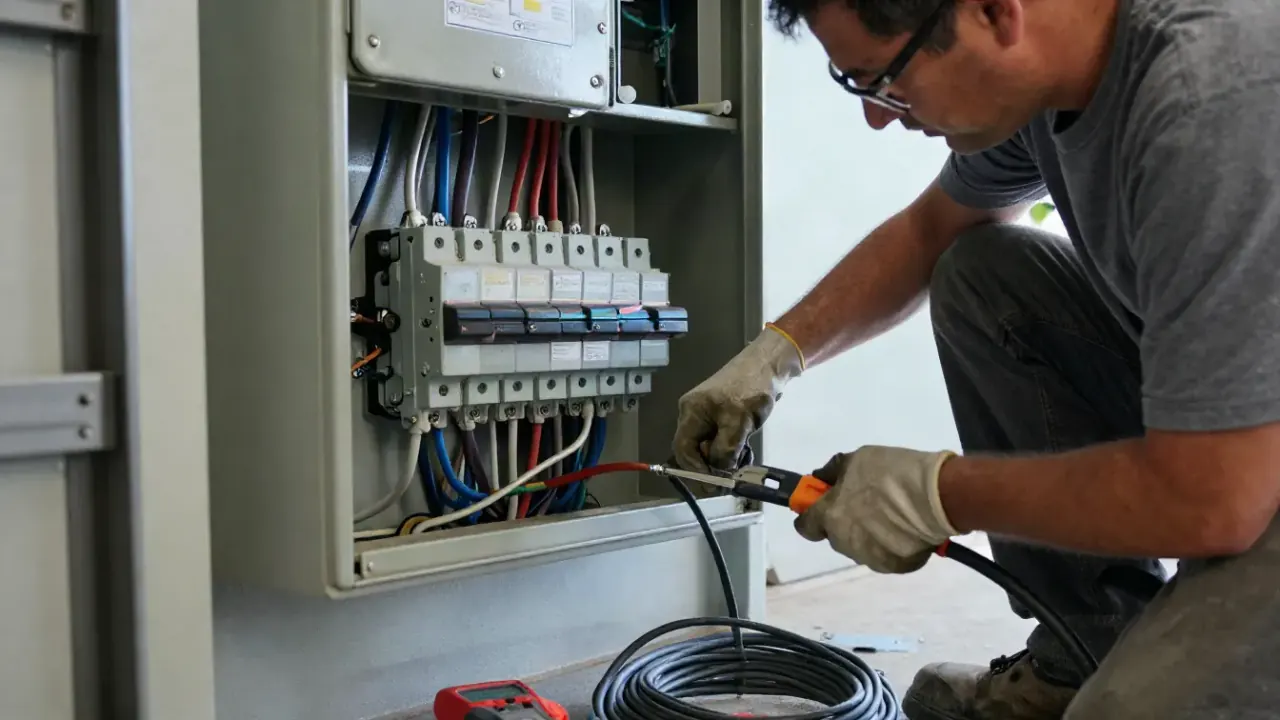
A dedicated 2-pole breaker sized for your charger, plus the conduit and copper wire run to the garage or driveway location. We can install the charger itself if you have it on hand.
We leave the backfeed breaker space open, label it, and document the bus rating so your solar installer can tie in a line-side tap or backfeed without a second panel change.
Code-required arc-fault and ground-fault breakers go in during the swap, including GFCI protection for the garage circuit where the charger lives. This is what gets the job past inspection under NEC 2020/2023.
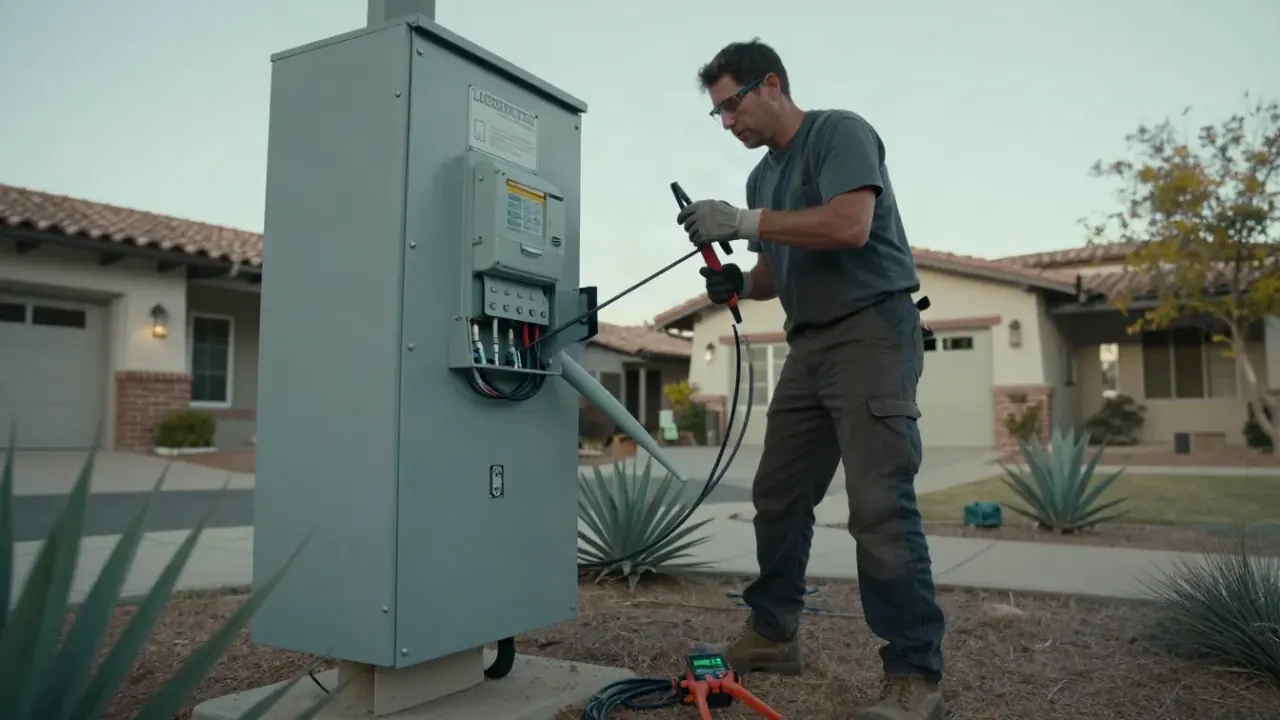
We file the city electrical permit, schedule the Southern California Edison disconnect, and meet the inspector on site. You get the signed permit card and photos of the finished panel.
A written load calculation showing existing draw, added EV load, and available capacity for solar. Your solar contractor and the city reviewer both get a copy.
The approach is the same for a home and a business. What changes is the access, the schedule and who needs the paperwork.
We upgrade your service so the EV charger and the solar array both have room. You get the load math in writing before we start.
We handle permits and utility coordination across multiple units. Each panel gets documented with photos and a load calculation for your records.
A plain-language look at what EV-Ready and Solar-Ready Panel Upgrades involves and when it is needed.
See how it worksEV-ready and solar-ready panel upgrades Upland CA is an electrical service change that replaces or reworks your main panel so it can carry a 240-volt EV charger circuit and a future solar interconnection at the same time. We run a full load calculation, size the bus and main breaker for the added draw, install a dedicated 2-pole breaker for the charger, and leave labeled space and conduit for the solar inverter feed. Everything lands under NEC 2020/2023 and California Electrical Code.
Most Upland homes built before 1990 still run a 100-amp panel with a handful of open slots. Add a 48-amp EV charger and a solar backfeed and you are over capacity before the first kilowatt moves. We see it constantly in The Colonies and North Upland, where two EVs in the driveway is normal. A solar ready panel upgrade near me Upland search usually starts the week someone signs a solar contract and the installer says the panel has to go first.
A panel sized for the charger and the array saves you a second service change later.
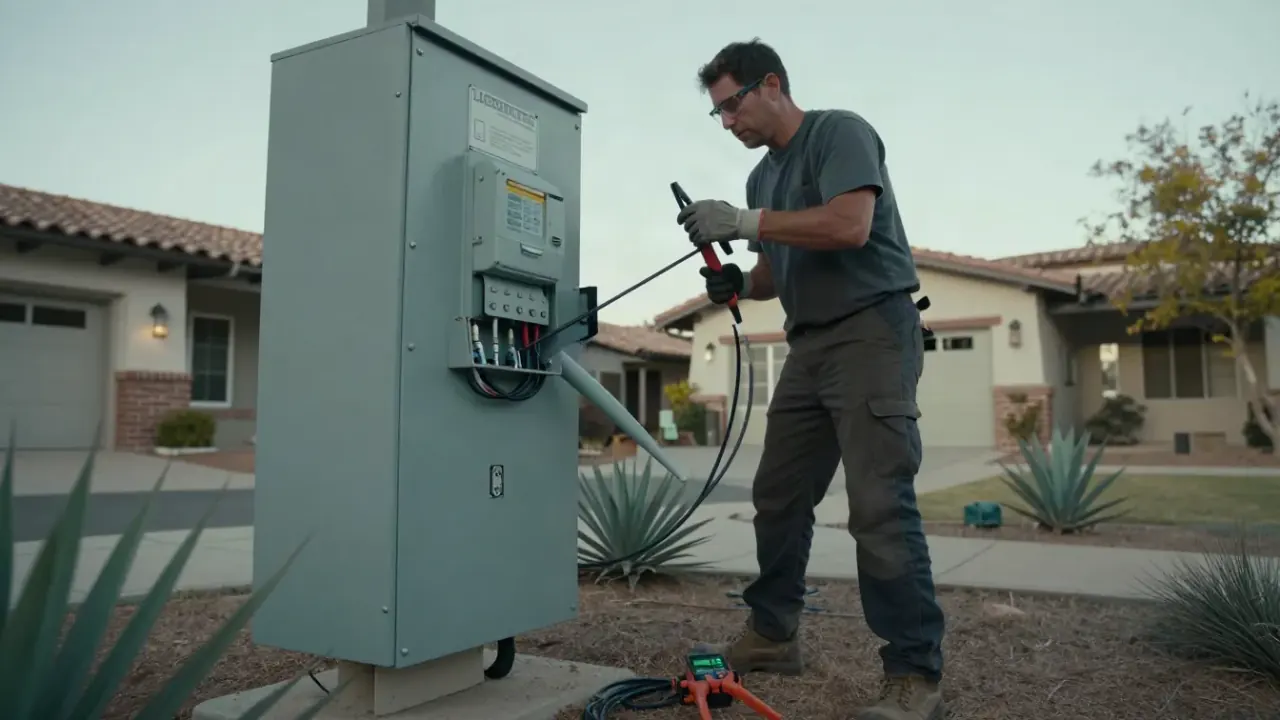
Five steps, one inspection, and a panel that is ready for both loads. Most jobs wrap in a single day.
We walk the house, log every major appliance, and run a load calculation against the EV charger and solar backfeed you plan to add. You get the real number, not a guess. This takes about 45 minutes and tells us whether a 200-amp service is enough or you need to step up to 400 amps.
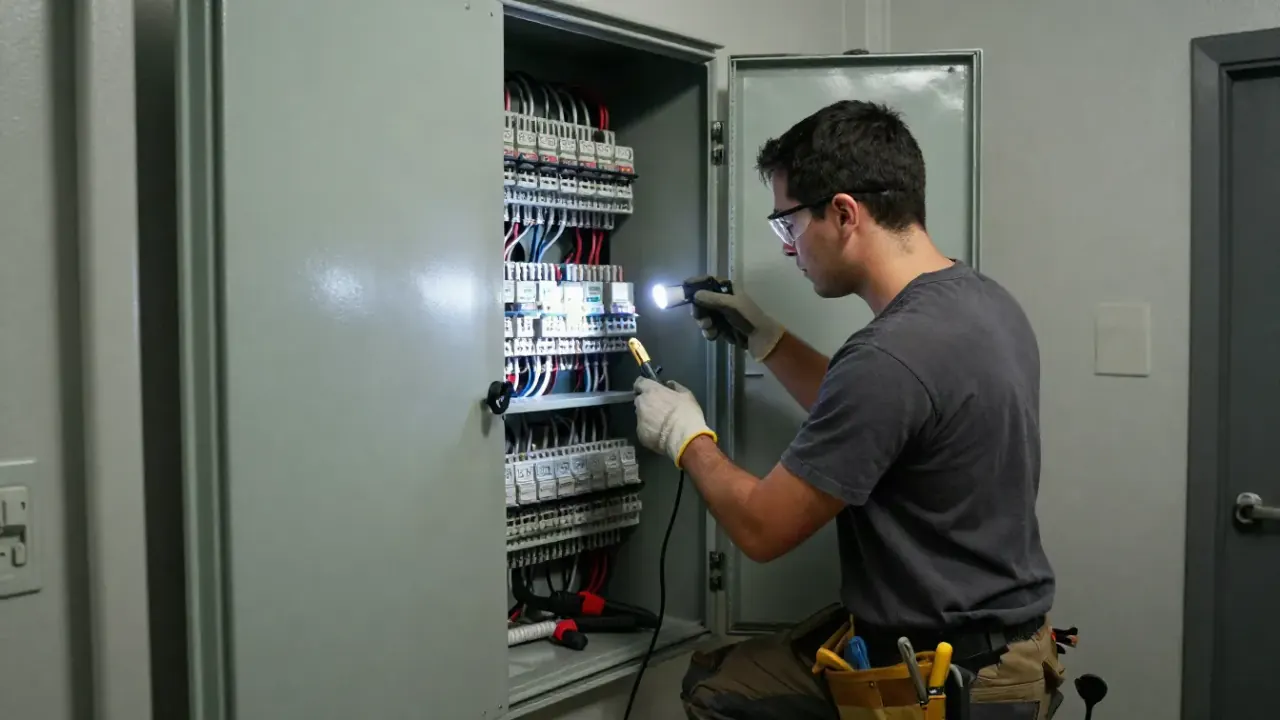
We file the city electrical permit and coordinate the utility disconnect with Southern California Edison. You pick the day. Most Upland jobs are scheduled within a week, and we confirm the power-off window the night before so you can plan around it.
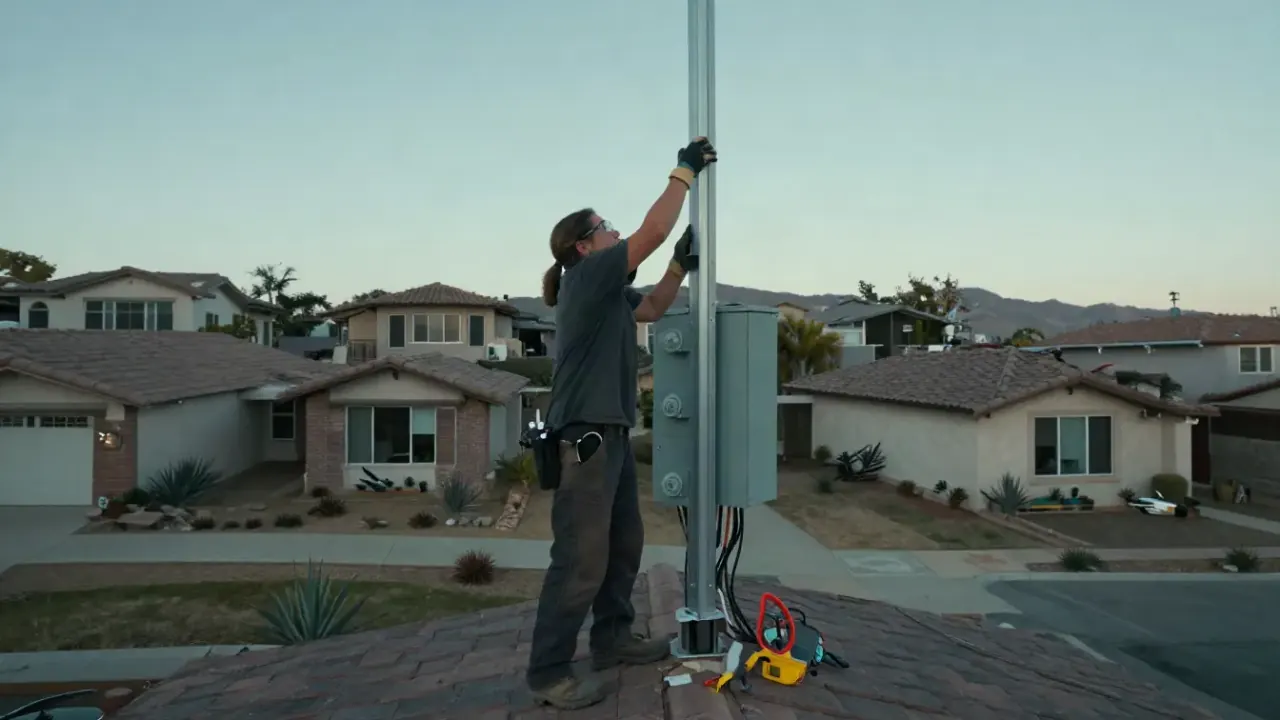
Power comes down in the morning. We pull the old panel, check the service mast and meter main for damage, mount the new Square D or Eaton panel, and land the circuits. The charger breaker and the solar-ready backfeed space go in on the same visit.
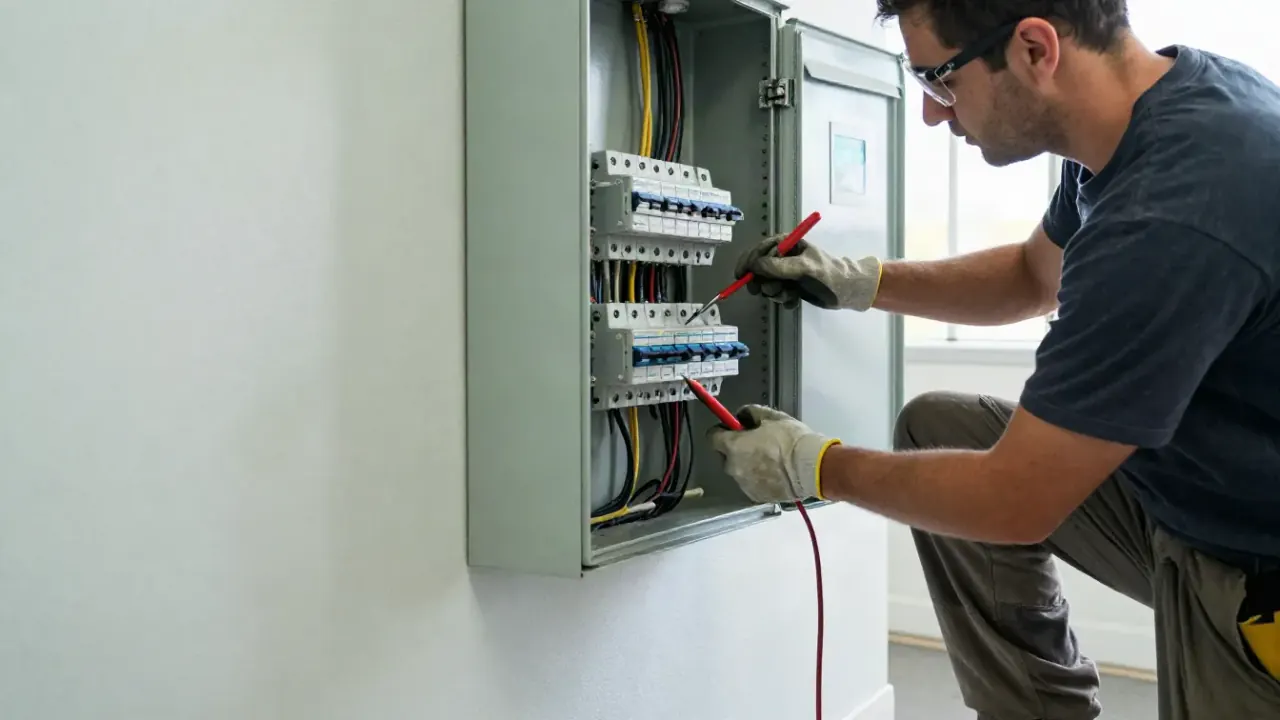
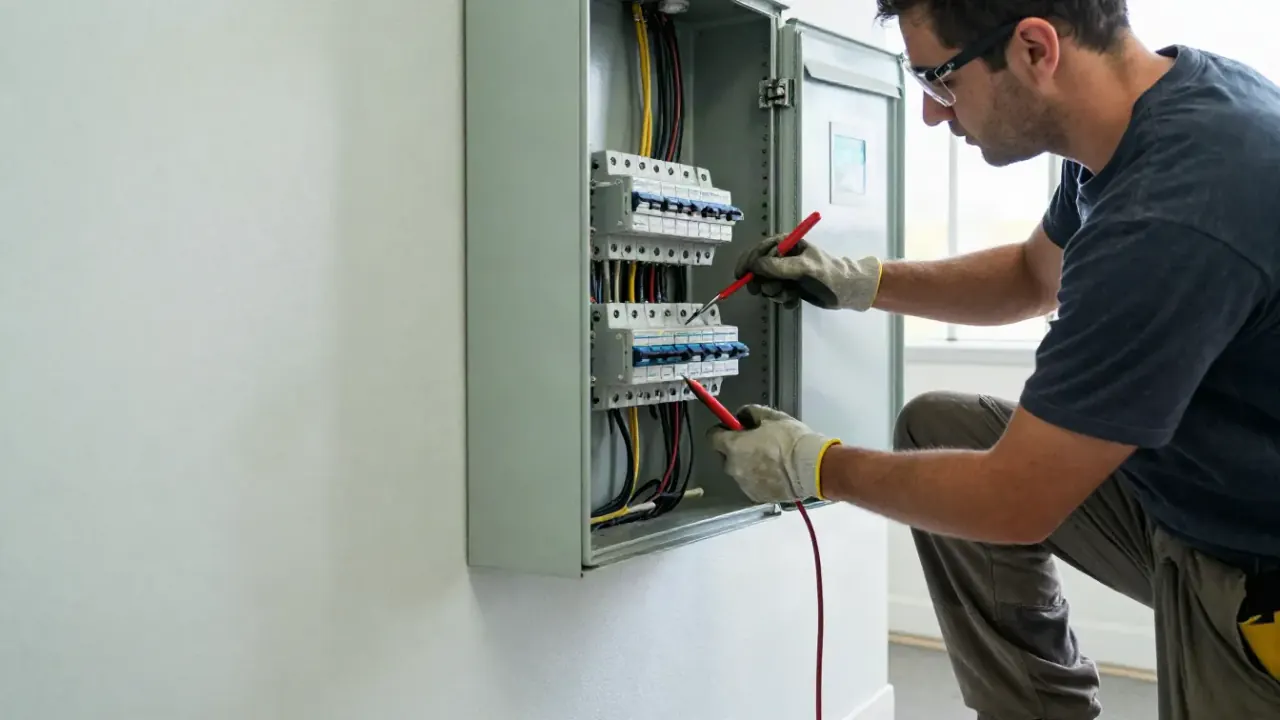
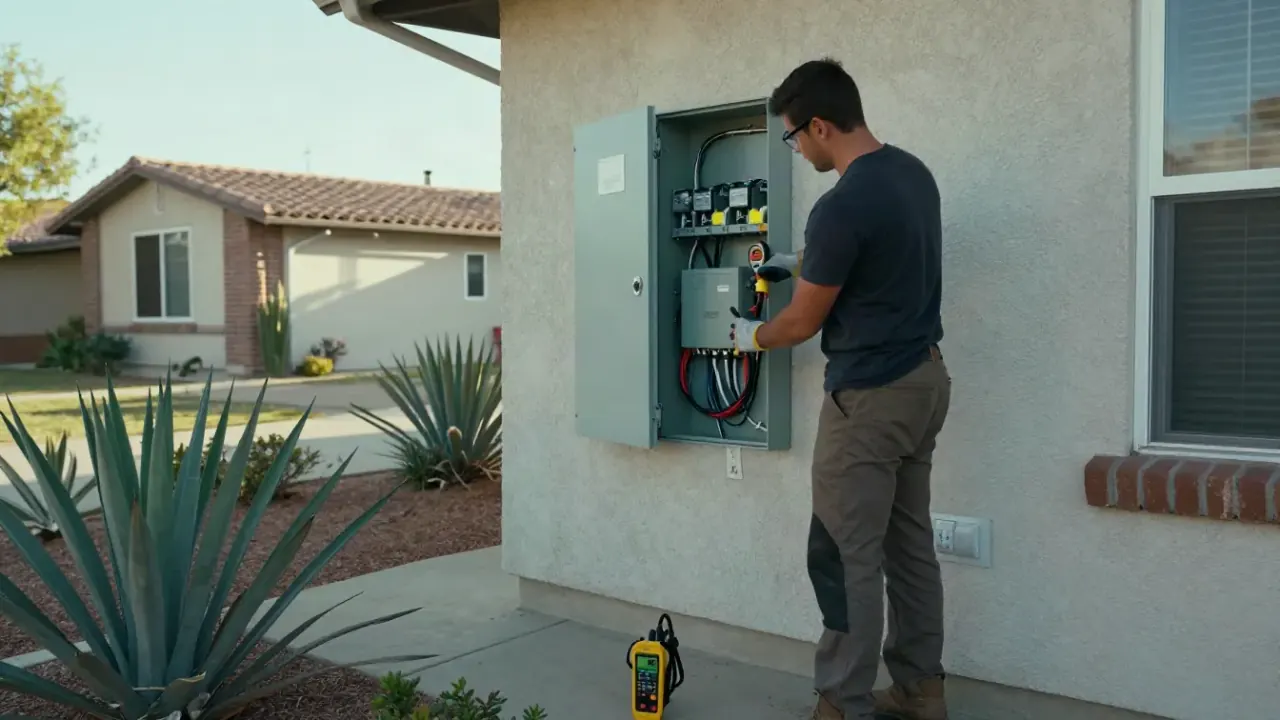
Every circuit gets a voltage tester and clamp meter reading before we close it up. We torque the main lugs with a torque screwdriver, apply panel labels, and verify AFCI and GFCI breakers trip correctly. You get a walkthrough of what each breaker controls.
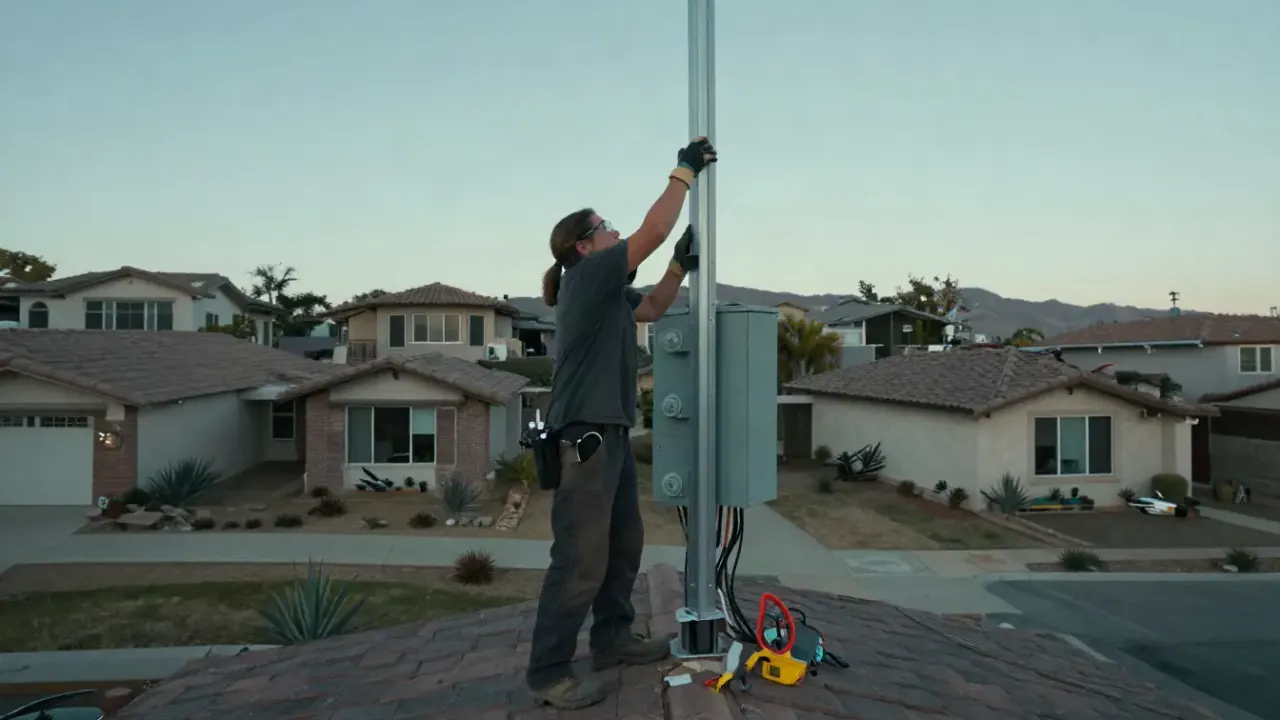
The city inspector signs off, usually within a few business days. We hand you the permit card, the load calculation, and photos of the finished panel so your solar contractor has everything they need to tie in the array.
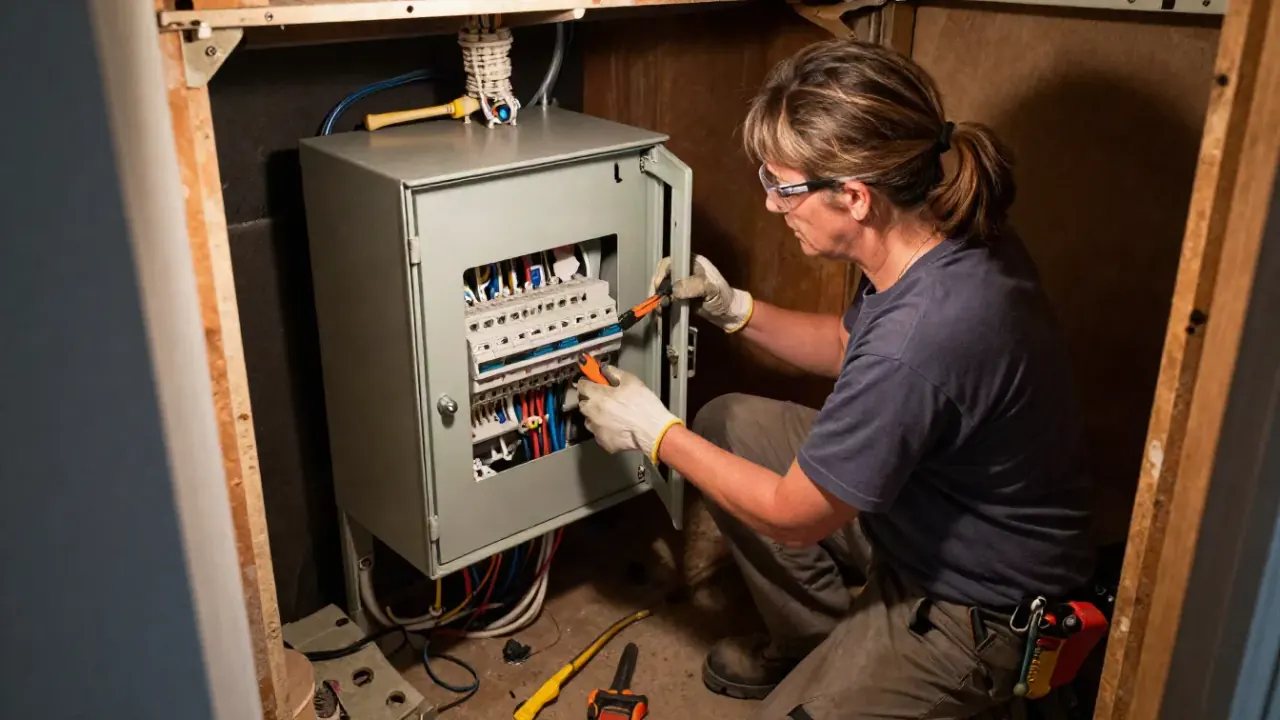
Move across a circle, or focus it and press Enter, for an illustrative thermal view of the photograph.
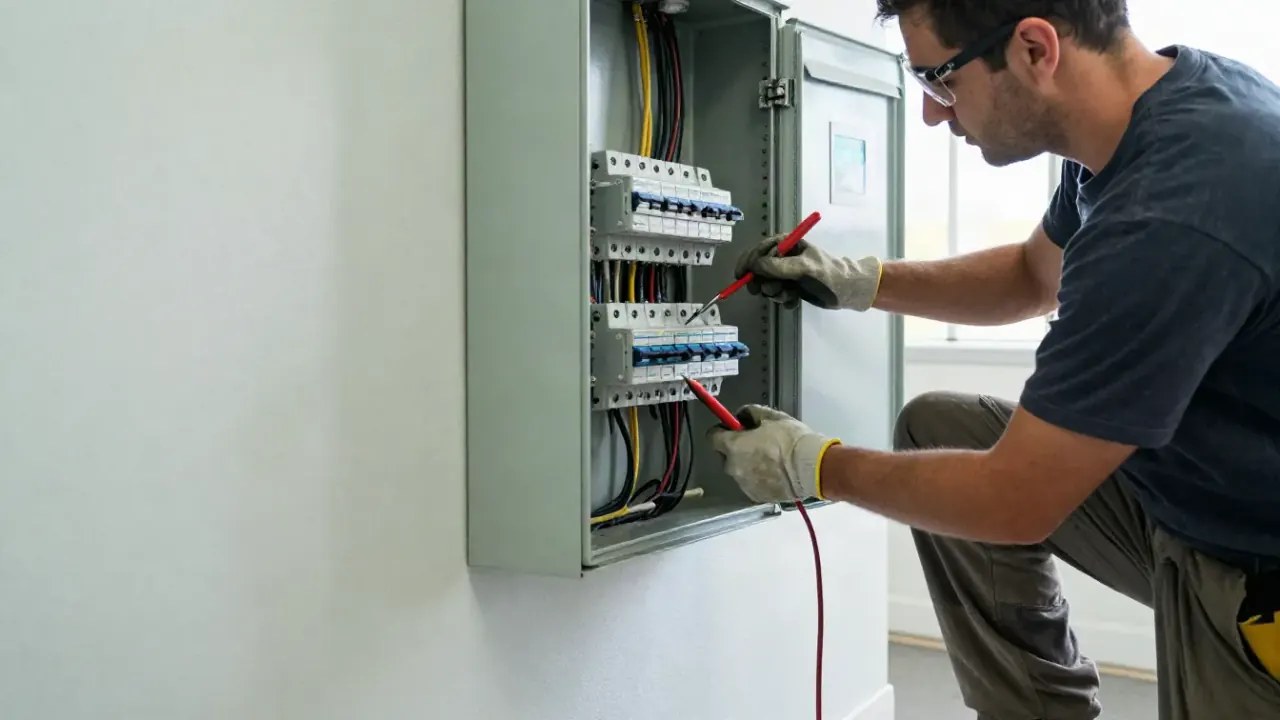
We read actual current on each circuit during the load check and verify voltage at the main before and after the swap.
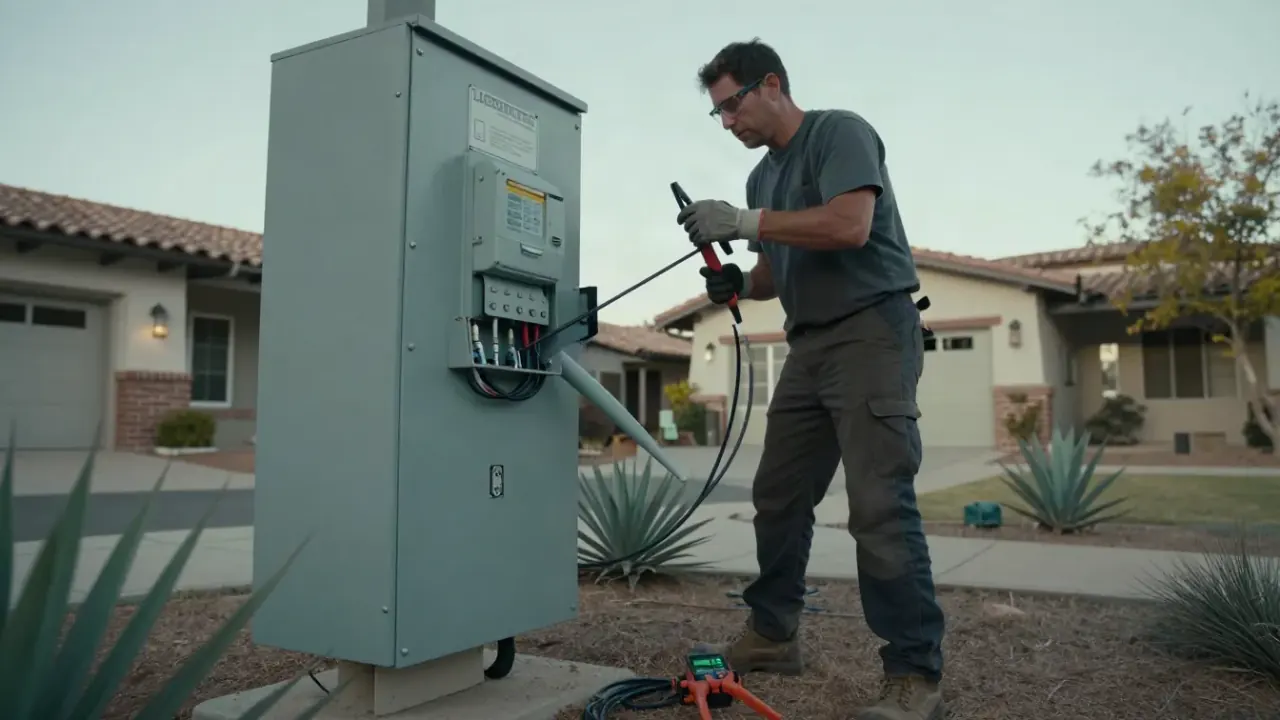
Every main lug and breaker terminal gets torqued to the manufacturer's spec, which is what keeps connections tight through Upland summer heat.
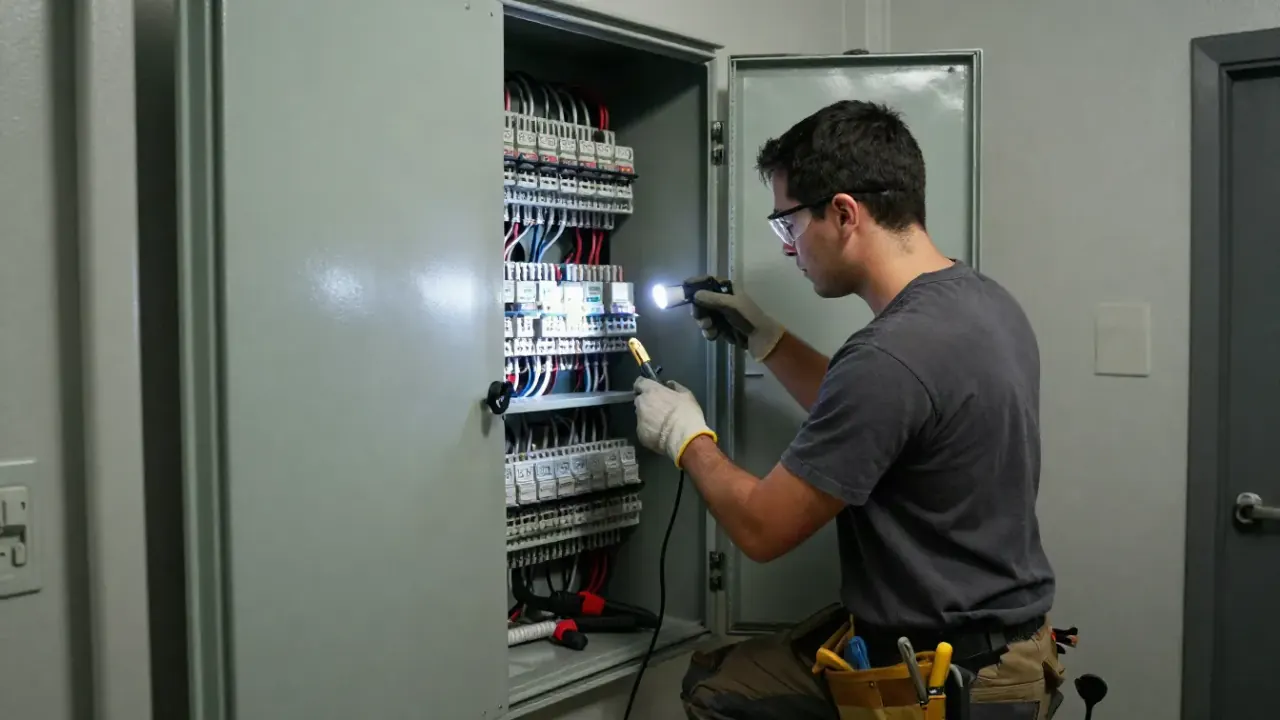
We map every circuit before the panel comes down so the new panel gets labeled correctly and nothing gets crossed.
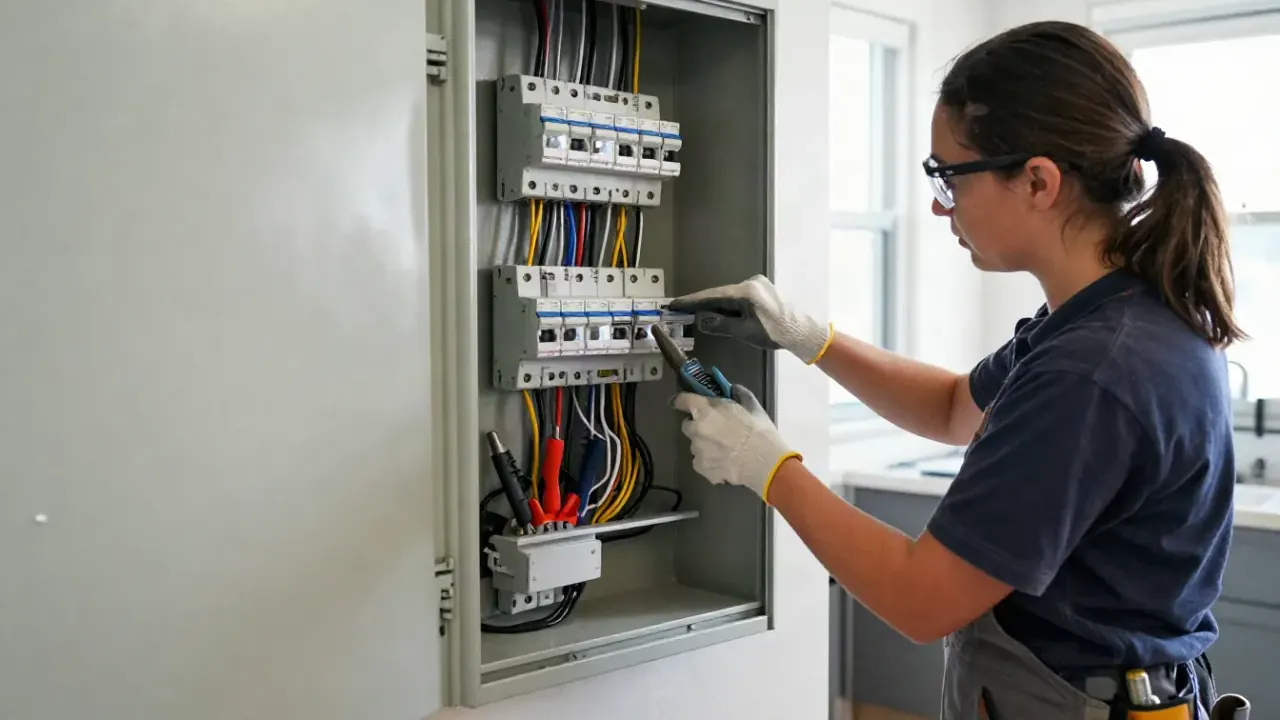
Standard OSHA safety compliance gear for live-service verification and the utility disconnect.
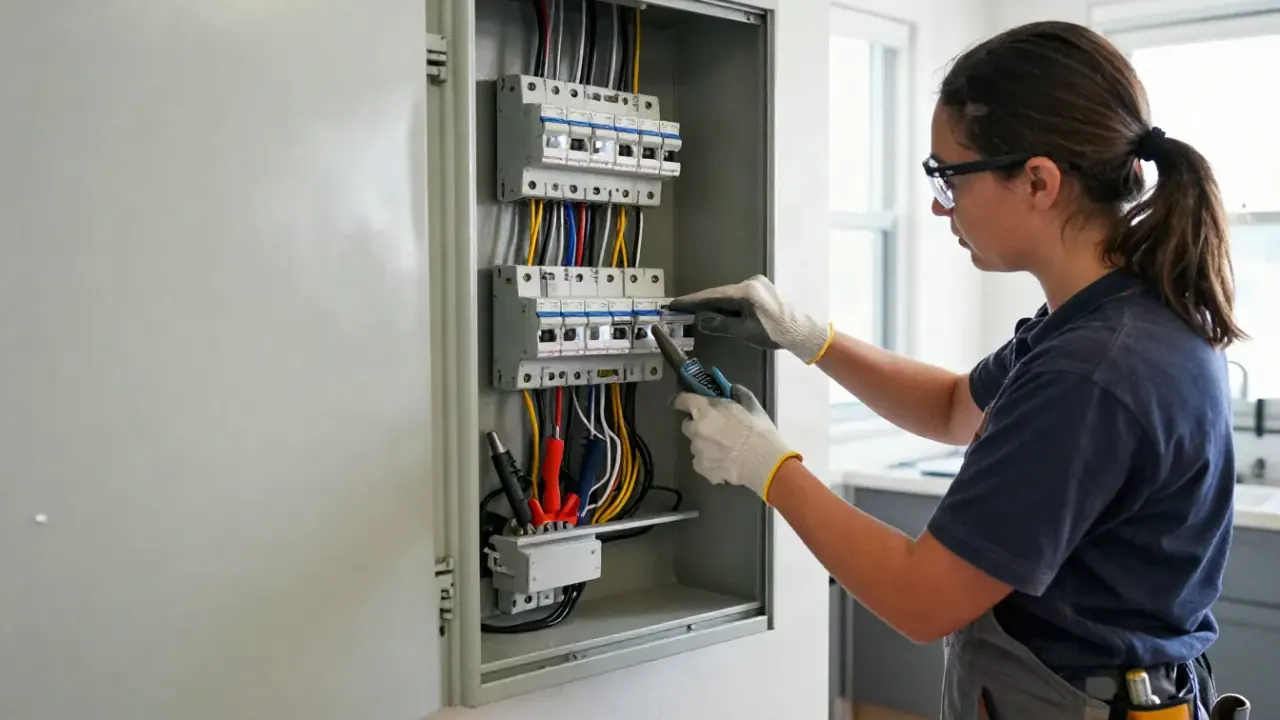
Used to run the EV charger circuit through finished walls and bend conduit for the garage or exterior run.
Thermal views are illustrative, generated from the photographs.
Clean cuts on copper and aluminum wire so terminations seat properly and pass inspection.
We calculate existing load, add the EV charger at 125 percent of continuous rating, and check available capacity for the solar backfeed. This is the number the city reviewer and your solar contractor both rely on.
Panel mounting height, working clearance, grounding, and labeling all follow the California Electrical Code and Title 24 energy standards where they apply.
We map which circuits require arc-fault protection and where ground-fault protection is needed, including the garage circuit feeding the EV charger.
We schedule the Southern California Edison meter pull so the power-off window is short and the service change happens in one visit.
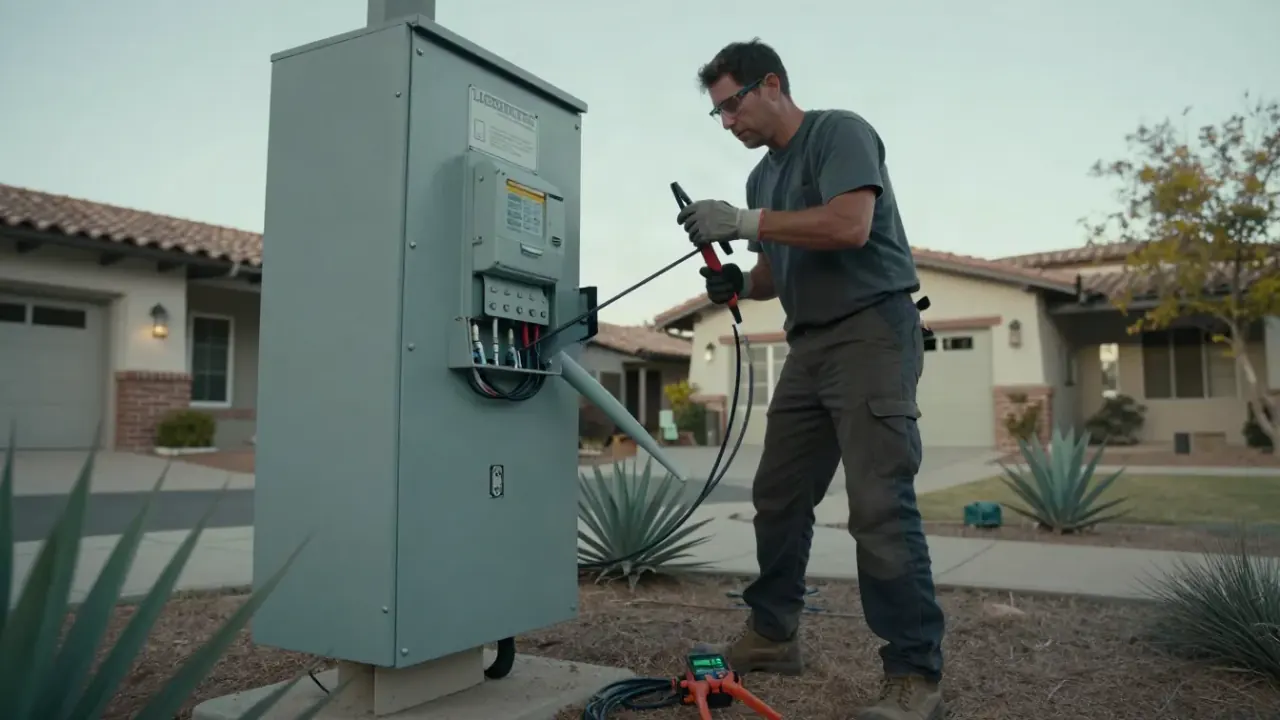
You just ordered an EV and the garage only has a 120-volt outlet.
We run the load calculation, upgrade the panel if needed, and install a 240-volt circuit with a 2-pole breaker sized for your charger. Most jobs are done in a single day with the power off.
Outcome: Level 2 charging at home, full amperage, and a panel that has room for the next circuit you add.
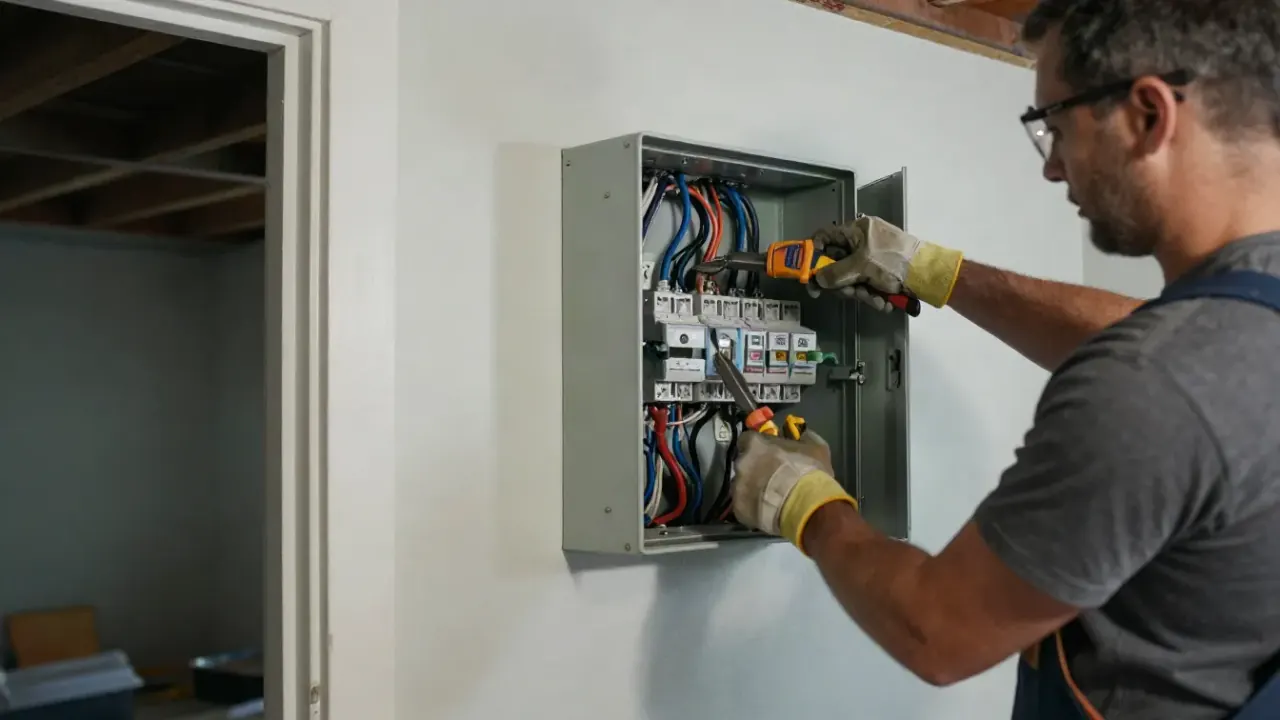
Your solar contract is signed but the installer says the panel has to be replaced first.
We handle the service change, coordinate the SCE disconnect, and leave the backfeed space labeled for the solar crew. The load calculation goes to your installer the same week.
Outcome: The solar project stays on schedule and the interconnection clears review without a second panel swap.
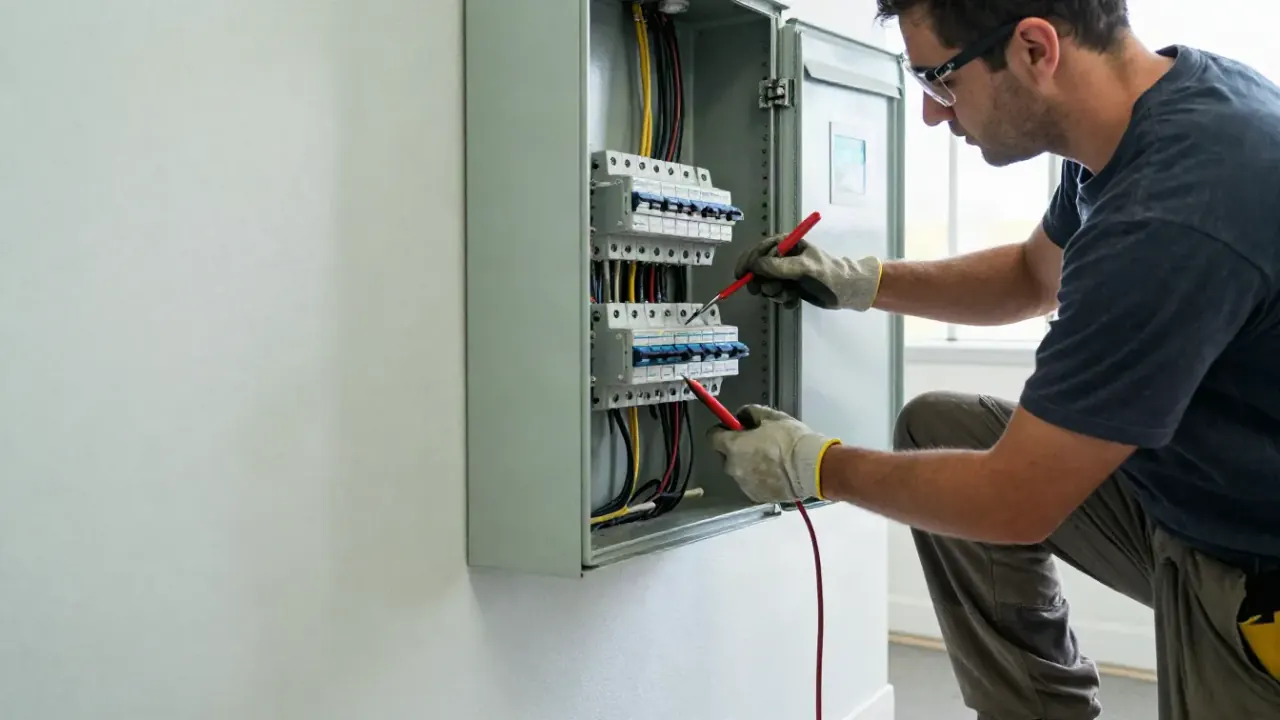
You are adding a second EV and the 200-amp panel is already near capacity.
We step the service up to 400 amps, replace the meter main and service mast if needed, and split the charger loads across dedicated breakers.
Outcome: Two cars charge overnight at full speed while the house runs its normal loads without tripping.
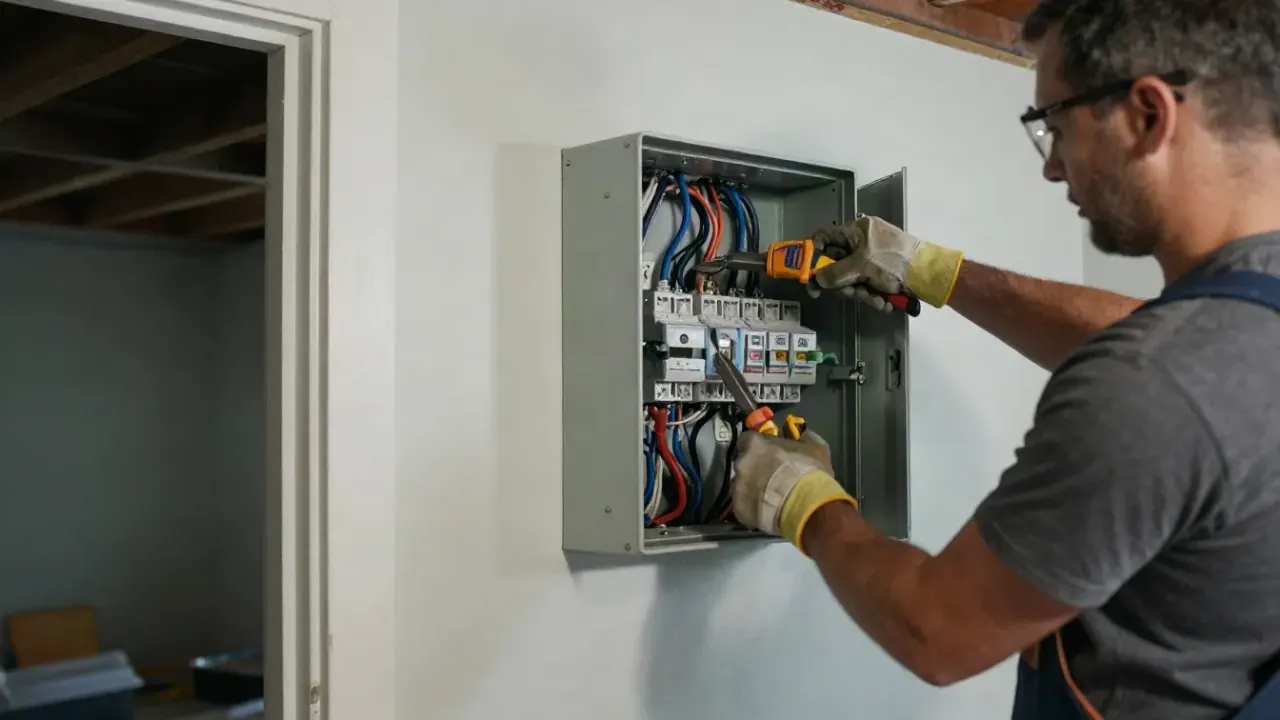
You bought an older Upland home with a fuse box and want to modernize before moving in.
We convert the fuse box to a breaker panel, install AFCI and GFCI protection, and set it up EV-ready and solar-ready from day one.
Outcome: A code-correct service that supports an EV charger and a future solar array without another upgrade.
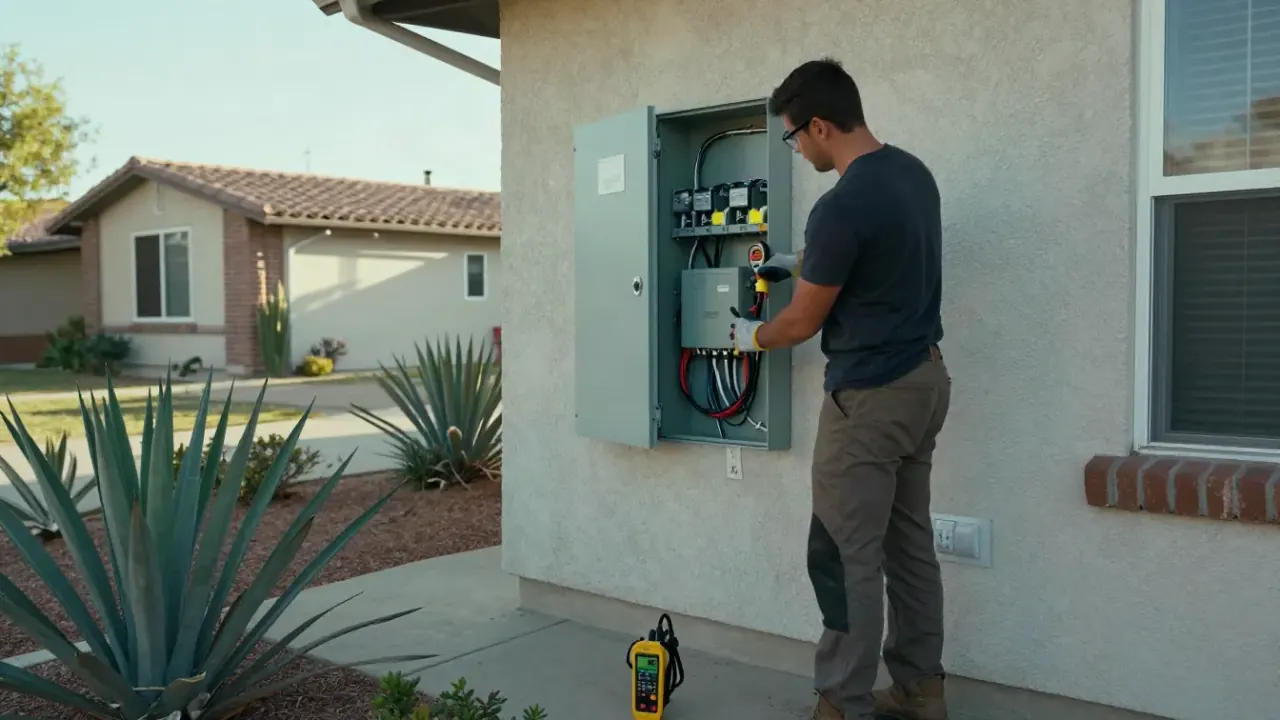
Upland sits at the base of the San Gabriel foothills, and the housing stock splits cleanly in two. Historic Downtown Upland and College Heights carry a lot of 1950s and 1960s homes still on 100-amp service with fuse boxes or early breaker panels. The Colonies and North Upland were built later, but many of those 1990s panels are already full because of electric ranges, dryers, and AC.
Add an EV charger and a solar backfeed and the math stops working. Summer attic temperatures in San Antonio Heights regularly exceed 130 degrees, which loosens terminations over time, so we torque every lug to spec and use copper wire on the main runs.
Upland CA solar ready panel upgrade permit reviews move faster when the load calculation is documented up front, and Southern California Edison disconnect scheduling is usually the longest lead item. If you are pricing a cost for EV-ready and solar-ready panel upgrades in Upland CA, the two variables that move the number most are whether the service mast needs replacement and whether you are stepping up to 400 amps.
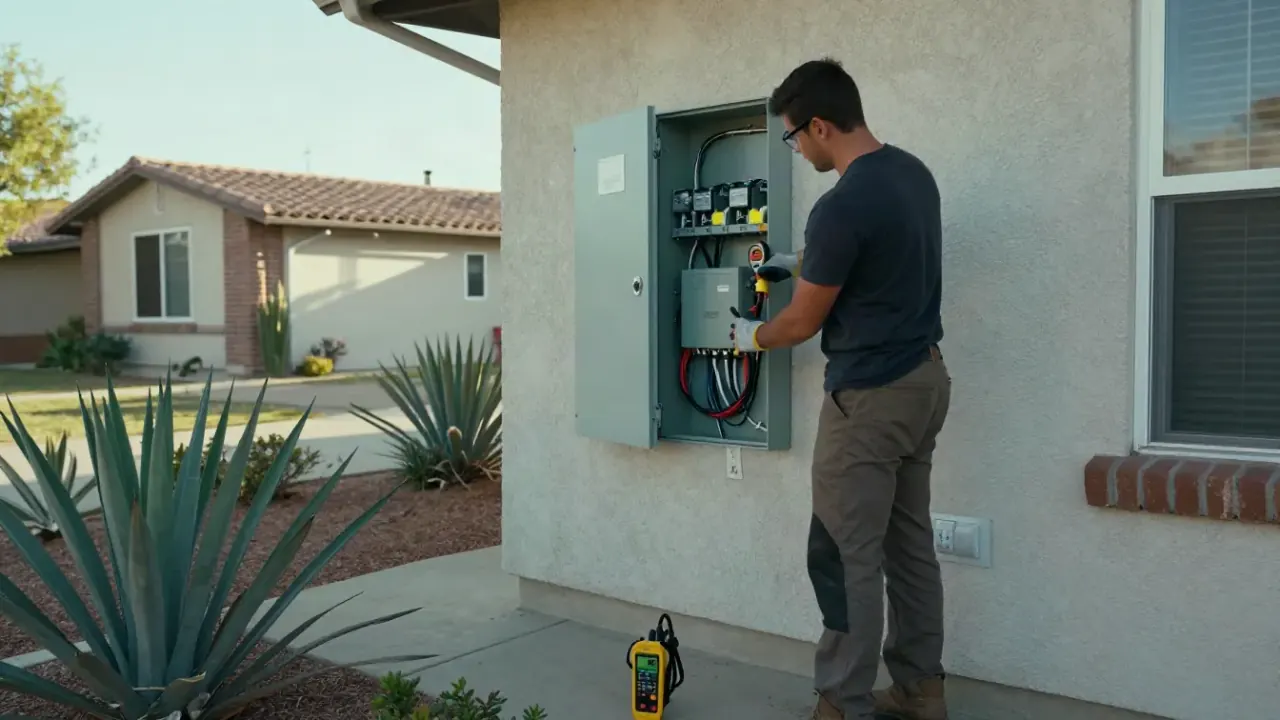
Before: A 1965 home in College Heights with a 100-amp panel, a full breaker bank, and no room for a charger. The owner had a Model 3 on order and a 120-volt outlet in the garage.
After: We installed a 200-amp Square D panel with a 60-amp charger breaker and a labeled solar backfeed space. The car now charges at full 48 amps overnight, and the panel has four open slots for future circuits.
Check the charger breaker monthly for warmth and keep the panel area clear. We recommend a torque check on the main lugs every three years.
Before: A 1958 home near Historic Downtown Upland still running a fuse box with Edison-base fuses. The solar contractor would not tie in until the service was replaced and brought up to code.
After: We converted the fuse box to a 200-amp breaker panel with AFCI and GFCI protection, documented the bus rating, and left the backfeed space open. The solar crew tied in the next week and the system passed inspection.
Test the AFCI and GFCI breakers every six months using the test button and keep the panel label legible for future service calls.
Before: A North Upland home with two EVs, a heat pump, and a 200-amp panel that tripped whenever both cars charged overnight. The owner was rotating charging times to avoid overload.
After: We stepped the service up to 400 amps, replaced the meter main, and split the two chargers across dedicated breakers. Both cars now charge at full speed simultaneously with no tripping.
Keep the area around the meter main clear and have the service inspected if you add another large load like a pool pump or second heat pump.
Most Upland panel problems show up the week someone buys an EV or signs a solar contract. Here is what we fix and what happens if it waits.
A panel that carries the charger and the array without tripping.
We pull a single city electrical permit that covers the service change and the EV circuit, then leave the solar interconnection ready for your installer.
A 200-amp service with a properly sized 60-amp breaker lets a Level 2 charger pull its full 48 amps. On an older 100-amp panel, most chargers get dialed down to 16 or 24 amps, which turns a 6-hour charge into an overnight job.
We install a line-side tap or a dedicated backfeed breaker with the labeling your solar contractor needs, so the array ties in without a second panel swap. Upland CA solar ready panel upgrade permit reviews go faster when the main service is already documented and code-correct.
Overloaded electrical panels trip breakers when the dryer, oven, and charger run together. We balance the circuits, add AFCI and GFCI breakers where the code requires them, and torque every lug to spec so the connections stay tight through summer heat.
What a written scope covers and what shapes it. Prices are set by the business after the first look.
Included
Depends on
Clear records you can keep and share.
Written capacity numbers for your records
Before and after the swap
Signed by the city inspector
Every circuit clearly identified
The difference is capacity, breaker space, and documentation for the loads you plan to add.
Carries the house as built
Adds a dedicated charger circuit
Carries both added loads
A list like this tells people straight away whether you cover their street. Not listed? Call and ask: it only takes a minute.
Based in Upland and covering the places around it. Pick one for local details.
A 400-amp service or a damaged meter main pushes the top of that range.
A solar-ready panel in Upland, California is a service panel with enough bus rating and open breaker space to accept a solar backfeed, plus a labeled interconnection point your installer can tie into. We size the bus for the array's output, leave the 2-pole space open, and document the main breaker rating so the solar permit review moves without a second service change.
The panel swap itself is a one-day job, usually 6 to 8 hours with the power off. Permit approval adds a few business days before we schedule, and the city inspection clears within about 3 to 5 days after the work. From first call to signed-off panel, plan on roughly two weeks.
You need one if your panel is 100 amps, has no open 2-pole breaker space, or already carries an electric range, dryer, and AC. A Level 2 charger pulls 40 to 48 amps continuous, and most older Upland panels cannot carry that plus the house load. We run the load calculation and tell you straight whether an upgrade is required.
Other services from the same team.
We run the load calculation, pull the permit, and leave your panel ready for the charger and the array. Call (909) 850-3163 and we will tell you what your panel can actually carry.
Call or email with your address and what the panel is doing, and we will tell you what the job likely involves. We answer calls Monday through Friday, 8am to 6pm, and return messages from Upland, Rancho Cucamonga, and Ontario the same business day. For dead panels and burning smells, say so on the call.