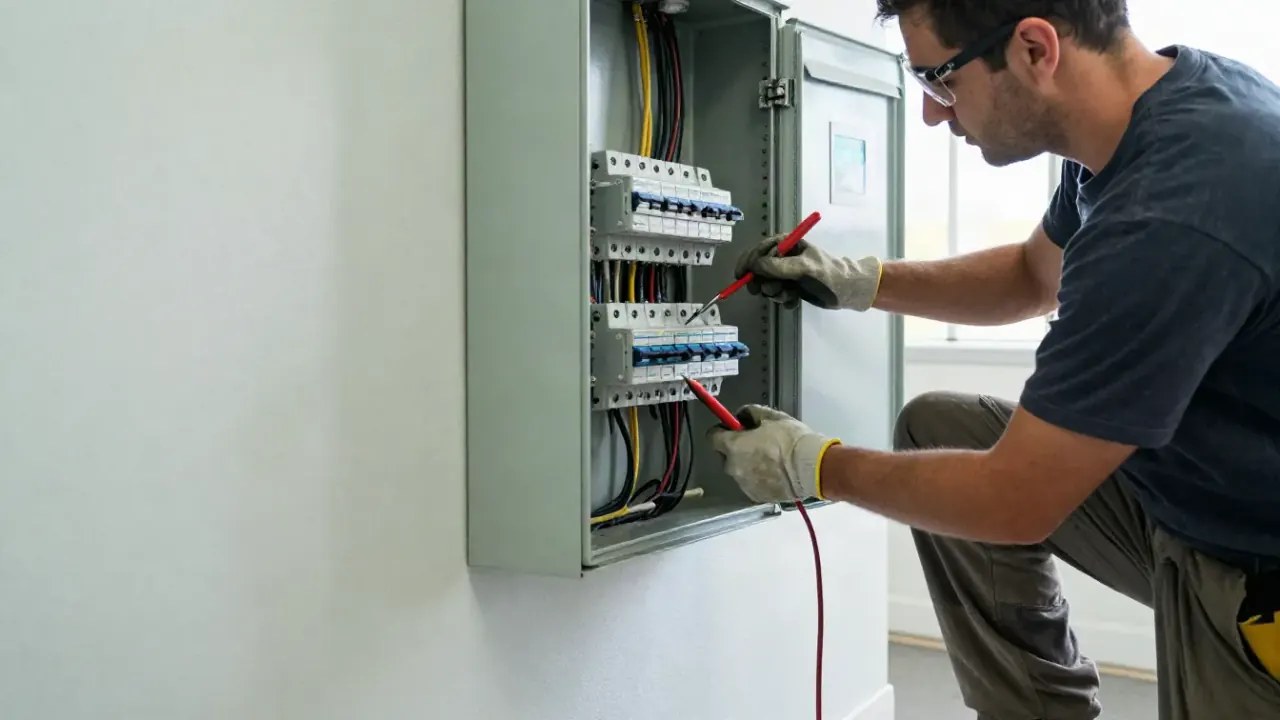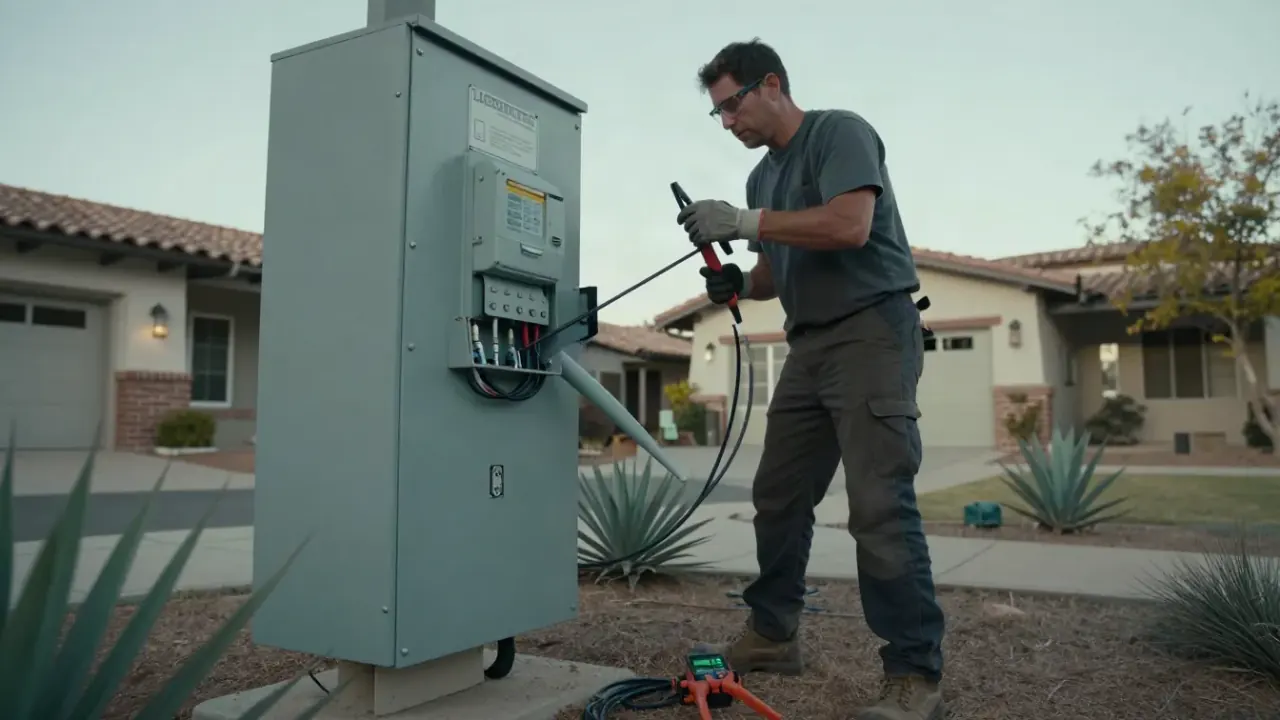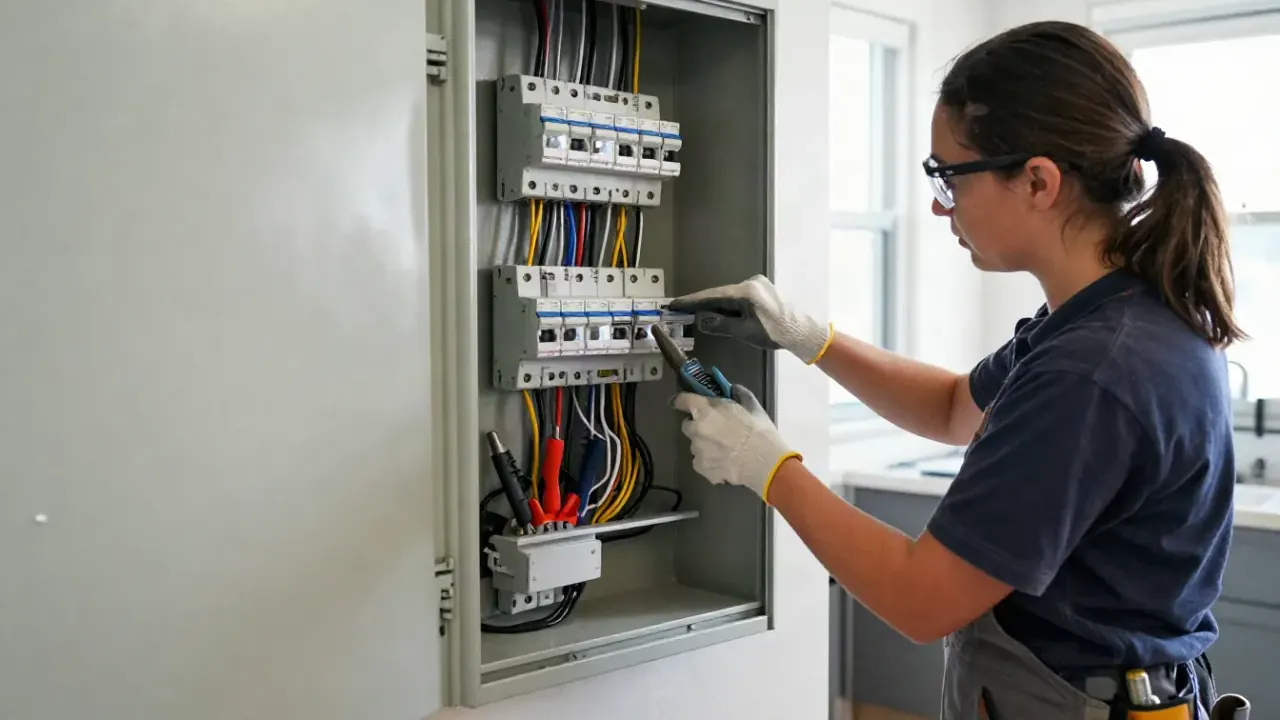
For Homeowners
We test your panel and every major circuit, then run the numbers. You get a written report and a plain answer on whether your service can handle what you want to add.
- Adding an EV charger
- Breakers trip in summer
- Old fuse box or panel
Electrical load calculation and inspection Upland CA is the first step before any panel upgrade, EV charger or solar install. We measure every circuit, run the numbers to California Electrical Code and tell you plainly whether your service can carry the new load. If you are in San Bernardino County and your breakers keep tripping, start here.
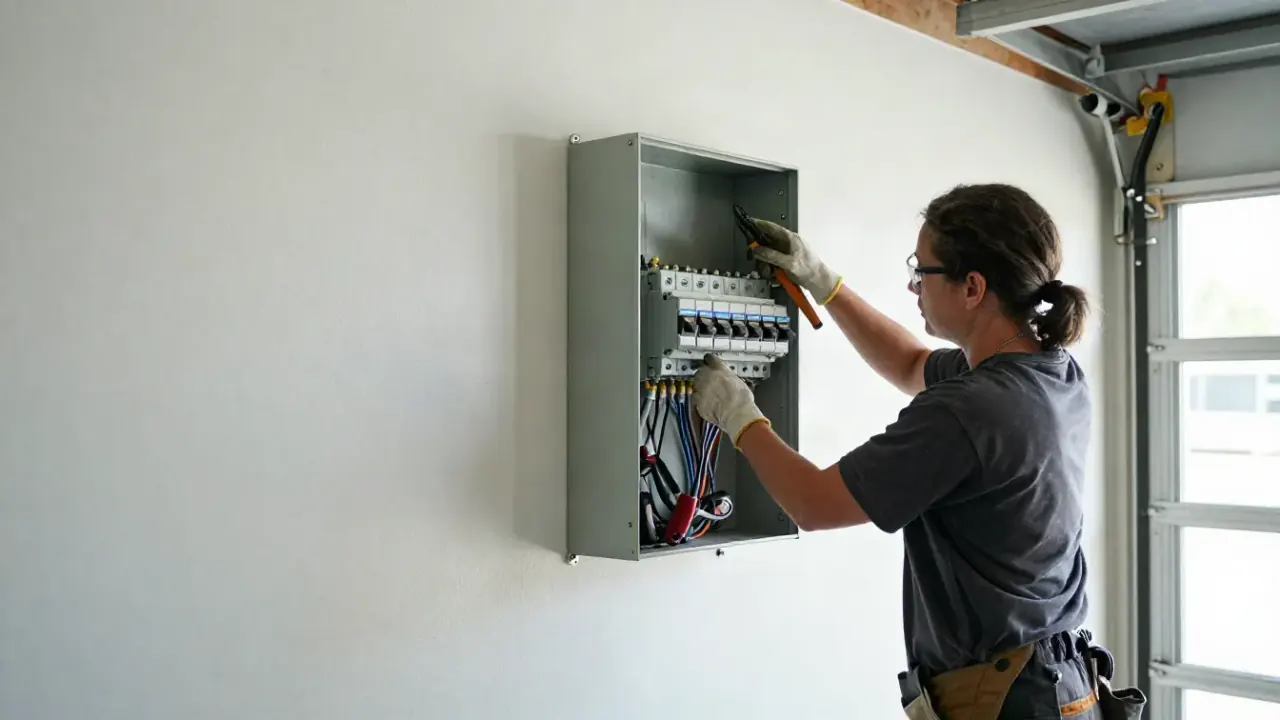 Clamp every circuitLog real amperagePhoto the panel
Every inspection covers the full picture: panel condition, real circuit amperage, code-compliant math and a written report you can hand to the city or your solar contractor. Here is what is in the standard job and what we quote separately.
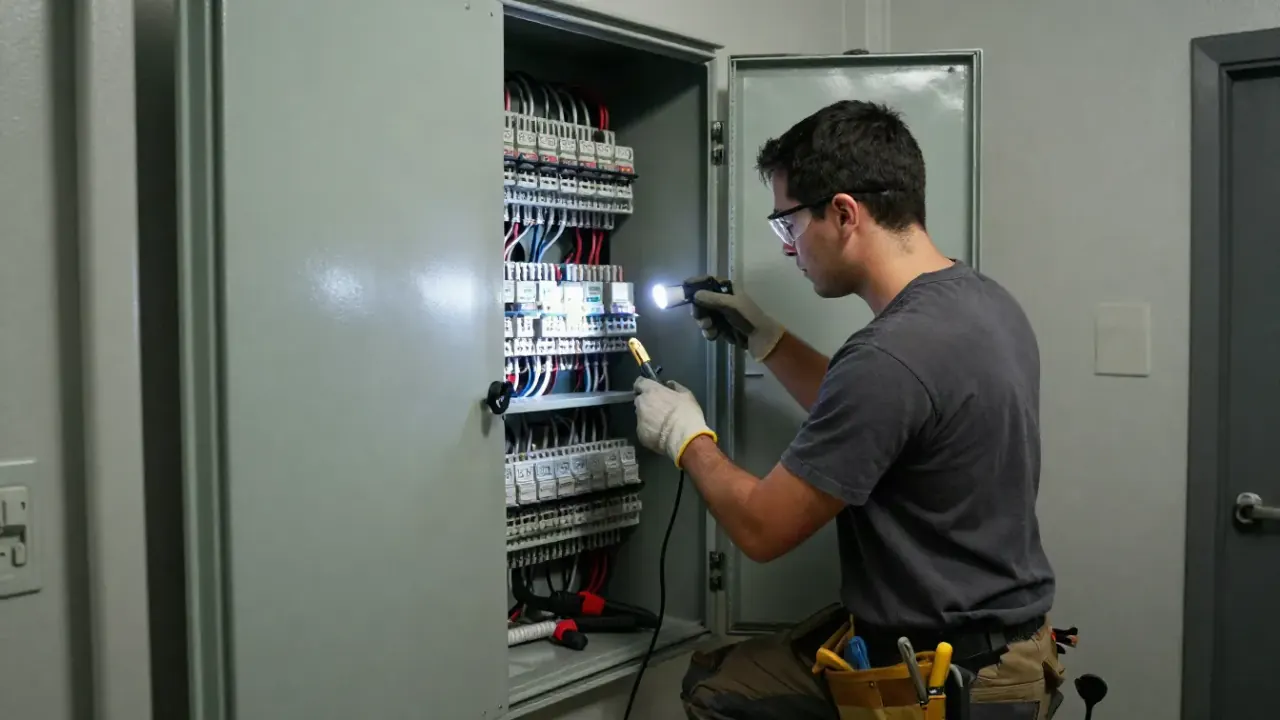
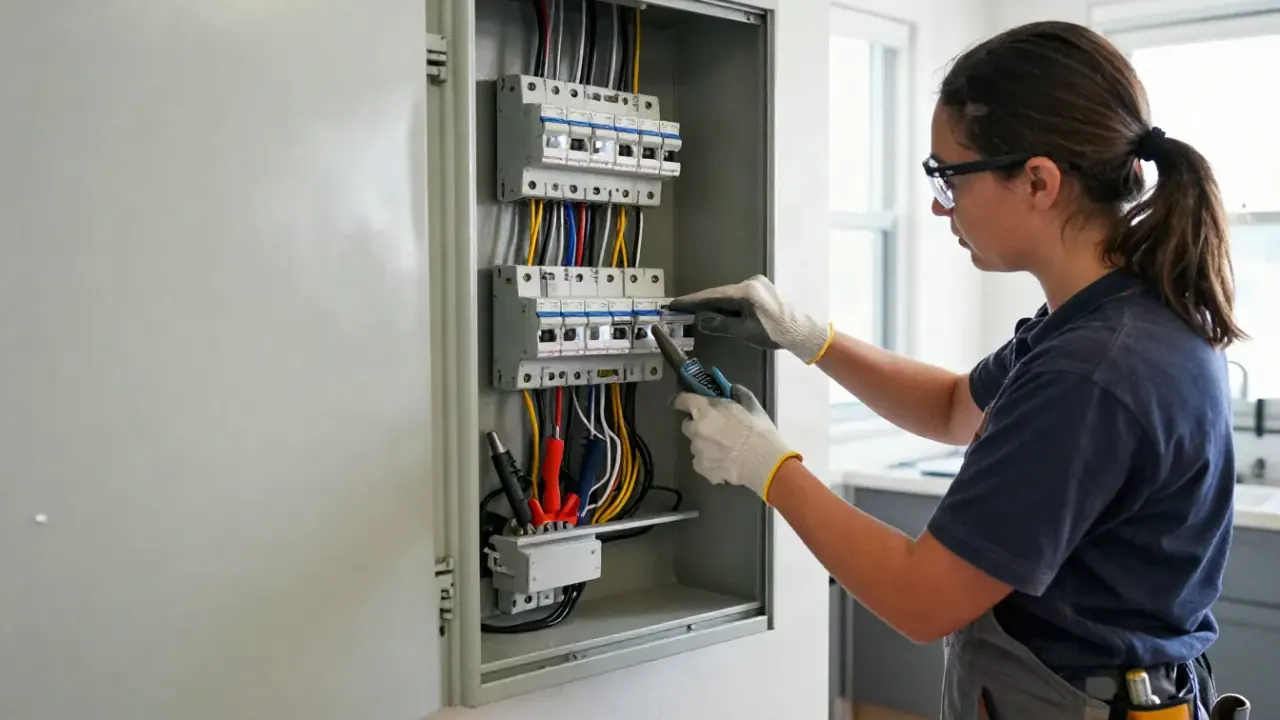
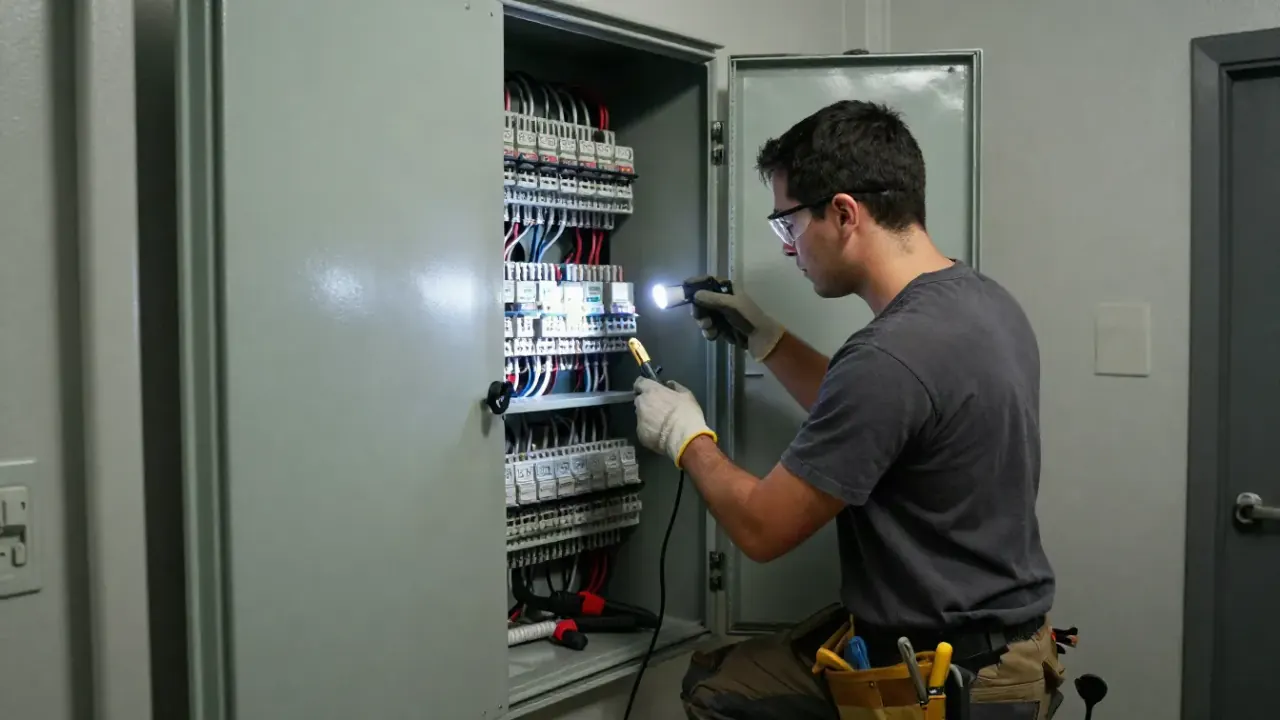
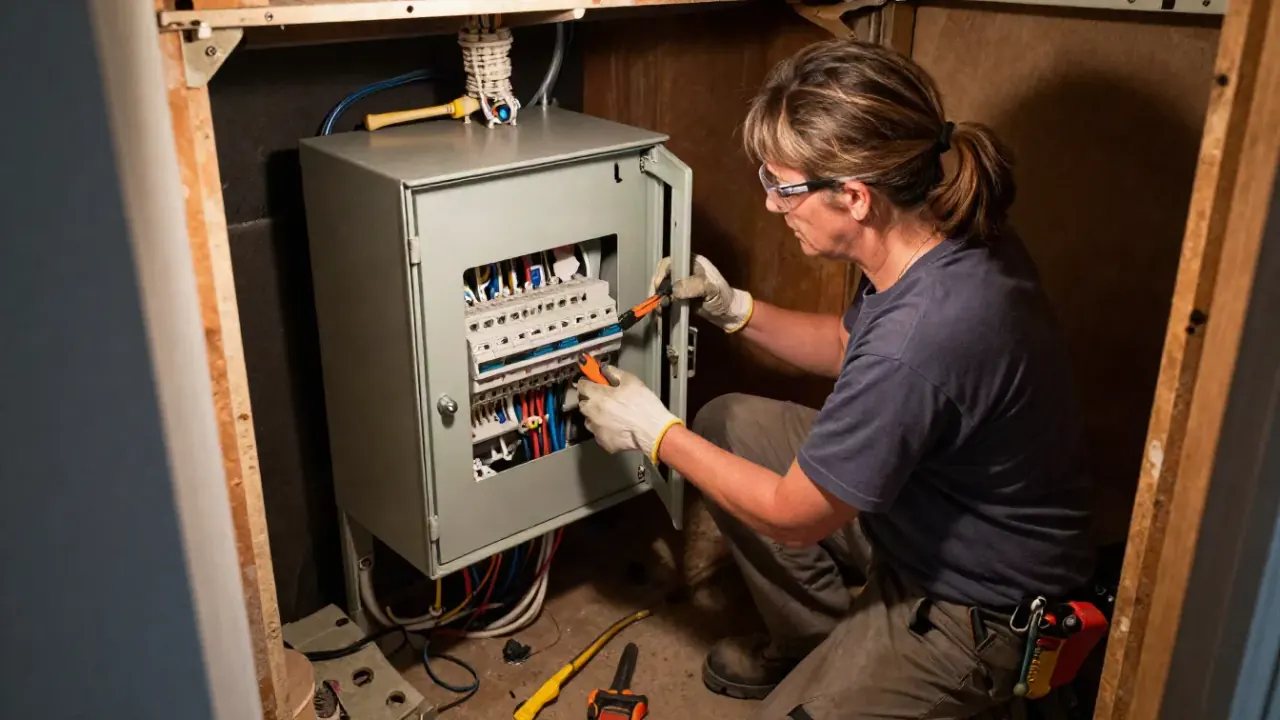
We pull the dead front and inspect the panel, breakers, meter main and service mast. Lugs get checked with a torque screwdriver, and we photograph anything scorched, double-tapped or undersized. Federal Pacific and Zinsco panels get flagged immediately.
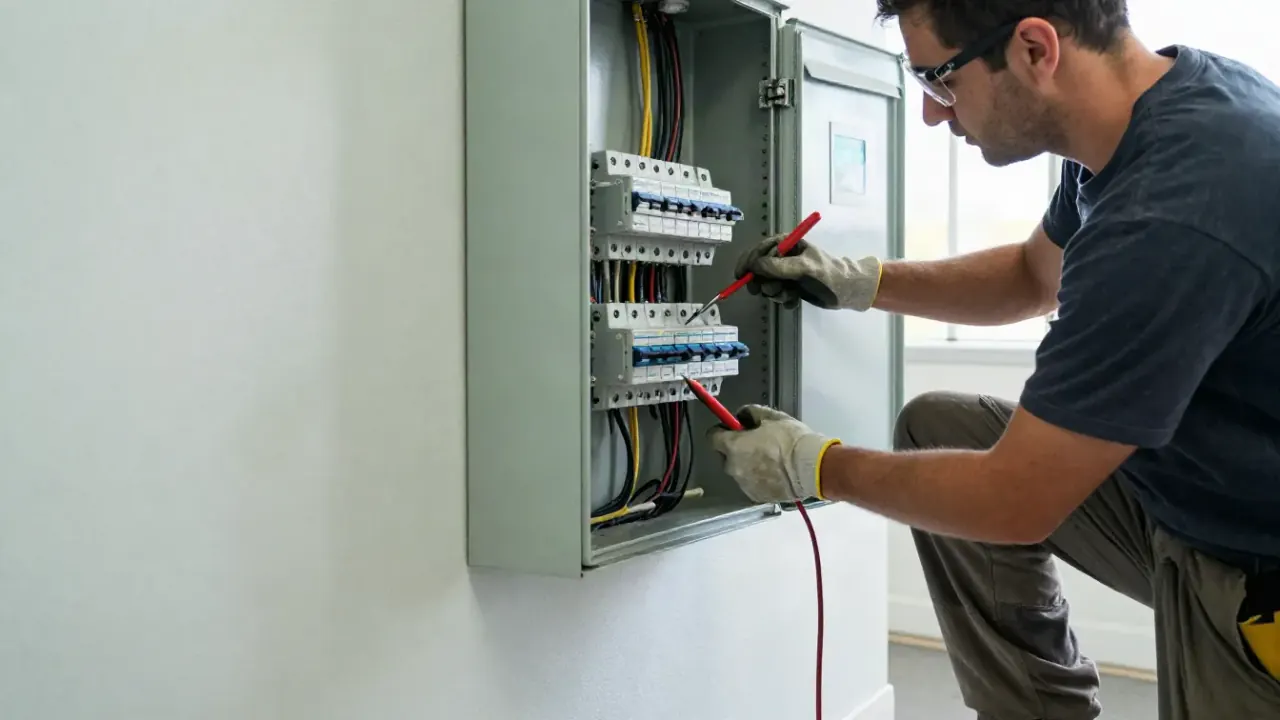
A clamp meter logs real amperage on every branch circuit while loads cycle on and off. We test the range, dryer, HVAC, water heater and any large motor. Nameplate ratings lie; measured draw does not.
We run the full calculation to NEC Article 220 and California Electrical Code, applying demand factors correctly for ranges, dryers and EV charging. The result is a service size recommendation you can defend at the permit counter.
You get the calculation worksheet, a labeled photo log of the panel interior and a plain-English summary. If a panel upgrade is needed, the report includes the recommended amperage and a same-day price.
If the numbers show you need more capacity, we tell you whether 200 amps covers it or whether a 200 to 400 Amp Service Upgrade is the better call for future EV and solar plans. One visit, one clear answer.
The approach is the same for a home and a business. What changes is the access, the schedule and who needs the paperwork.
We test your panel and every major circuit, then run the numbers. You get a written report and a plain answer on whether your service can handle what you want to add.
A plain-language look at what Electrical Load Calculation and Inspection involves and when it is needed.
See how it worksAn electrical load calculation and inspection Upland CA is a full accounting of every load your home pulls at once. We clamp each circuit, log the amperage, then run the numbers against NEC Article 220 and the California Electrical Code. You get a stamped-style worksheet showing whether your existing service handles the load or needs a 200 to 400 Amp Service Upgrade.
Upland homes from Historic Downtown to The Colonies were built across seven decades, and many still run 100-amp services with aluminum wire and no AFCI protection. Add an EV charger or a solar array and the math stops working. That is why we start every job with an electrical load analysis in Upland, California, then hand you a clear path forward with real numbers.
A load calculation tells you what your panel can actually carry before you add anything.
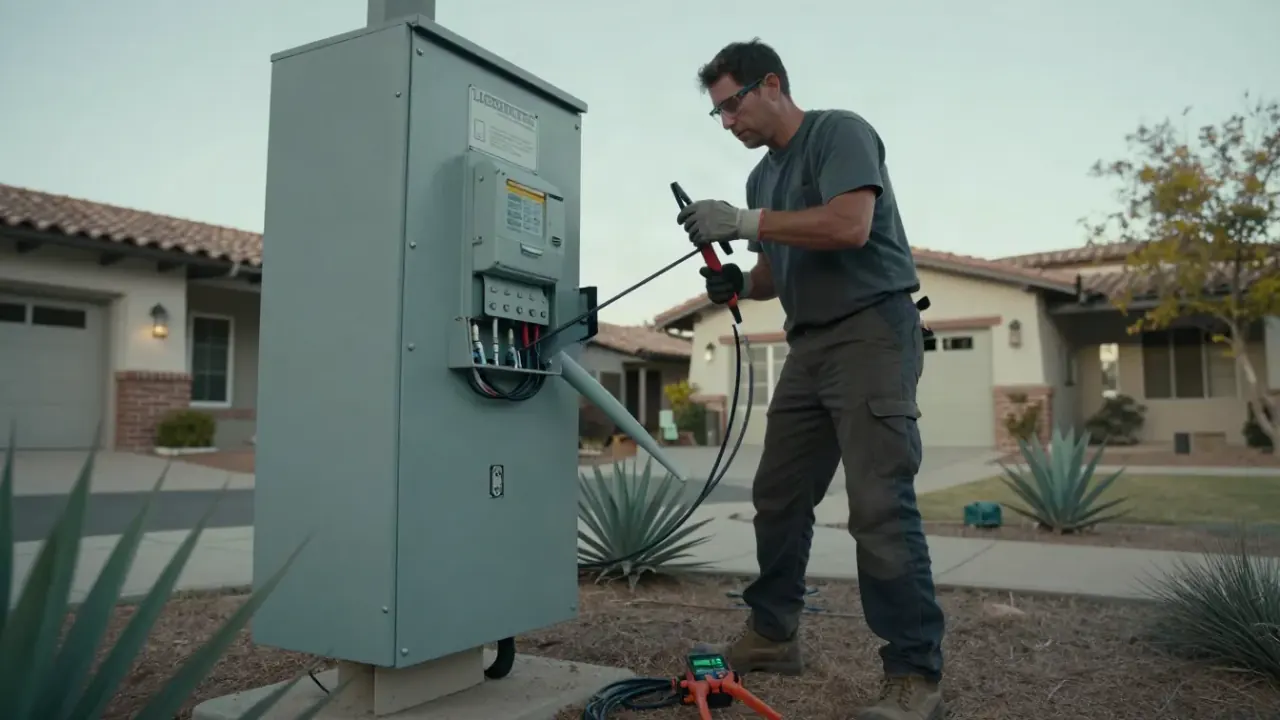
Five steps, usually two to four hours on site, and you get the written results the same day. Here is exactly what happens when we show up.
We walk the house with you and list every major appliance, motor and future addition: EV charger, hot tub, shop tools, solar. You tell us what you plan to add in the next two years, and we build the calculation around that, not just what is plugged in today.
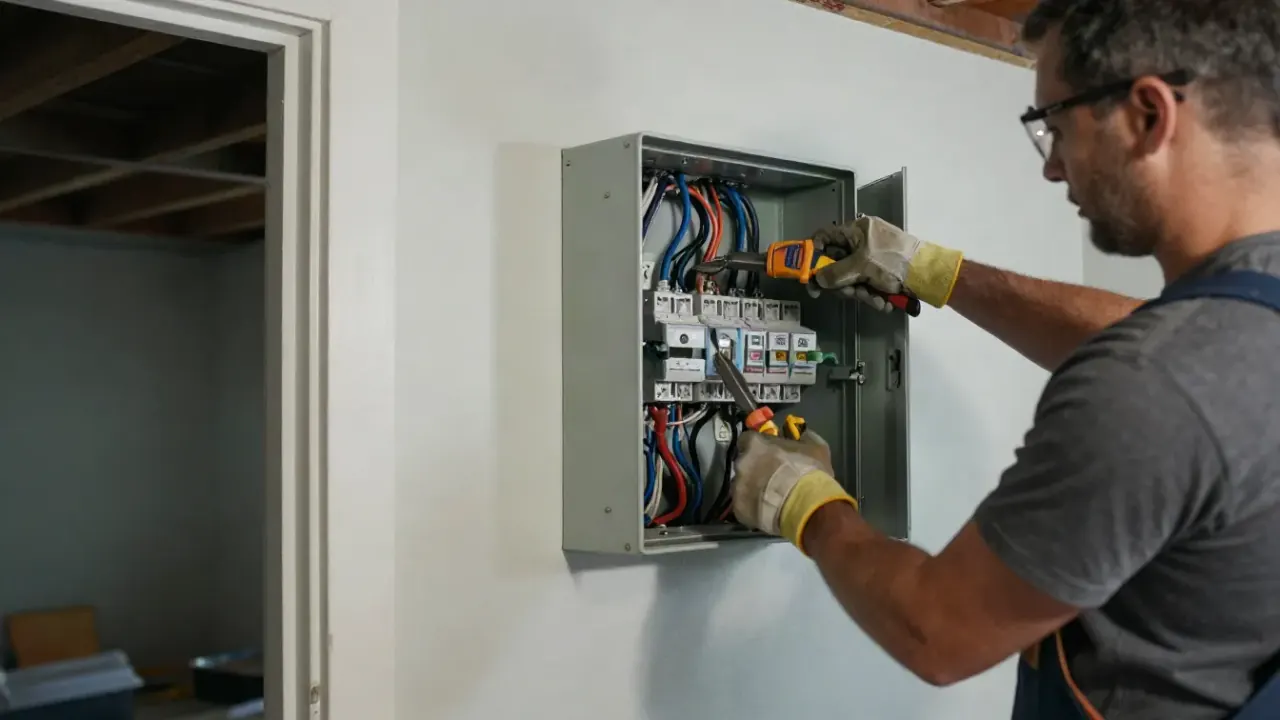
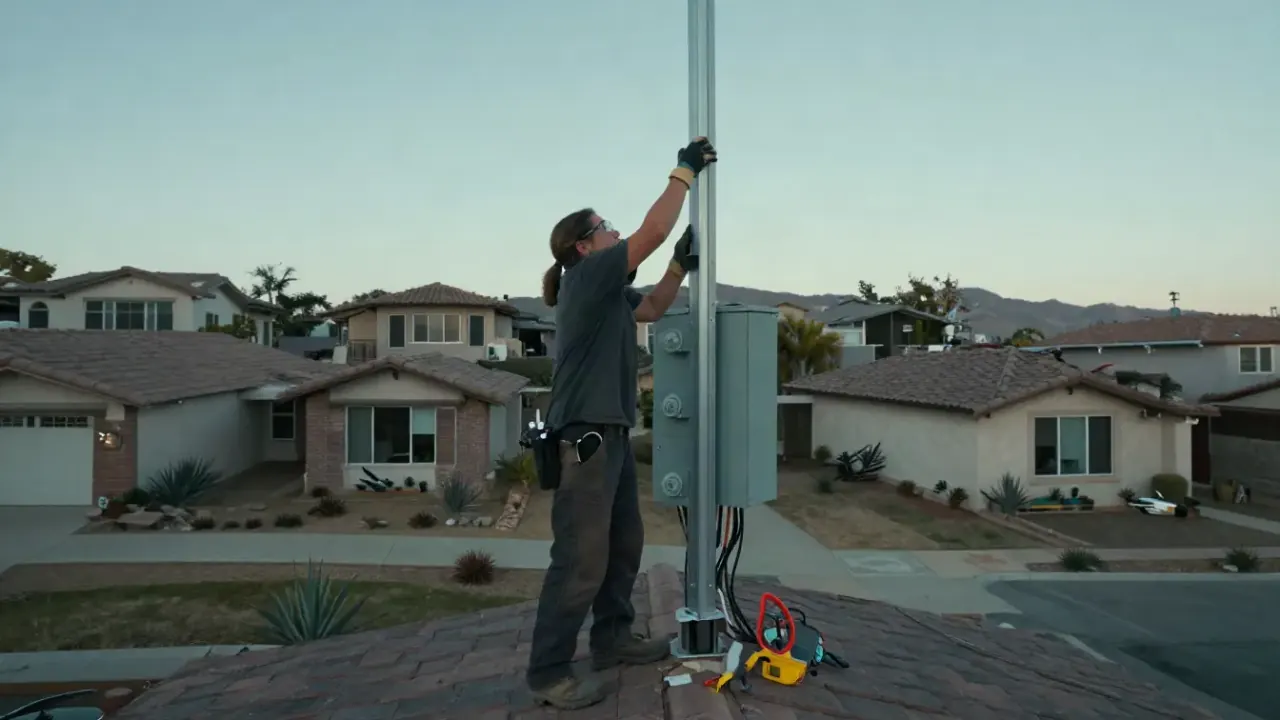
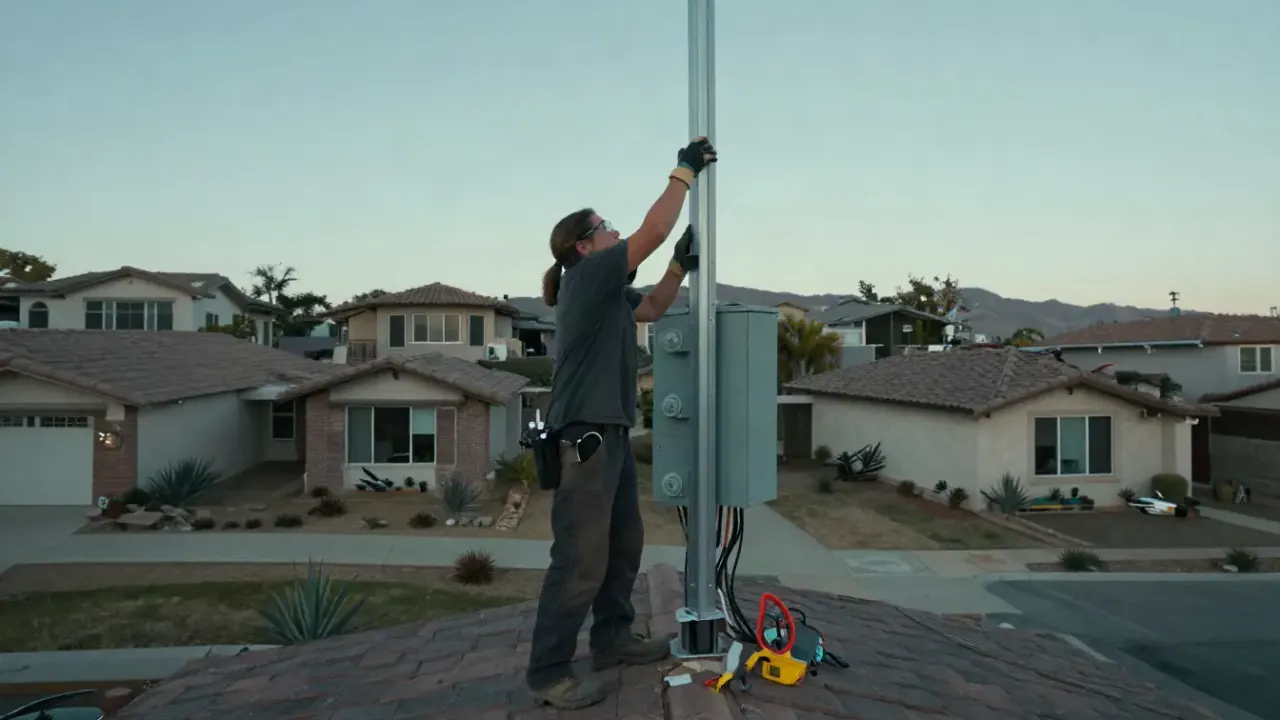
We pull the dead front and inspect the panel, meter main and service mast. Breakers get checked for heat damage, double taps and correct sizing. On older Upland homes we look specifically for Federal Pacific and Zinsco panels, which fail without warning and cannot be trusted.
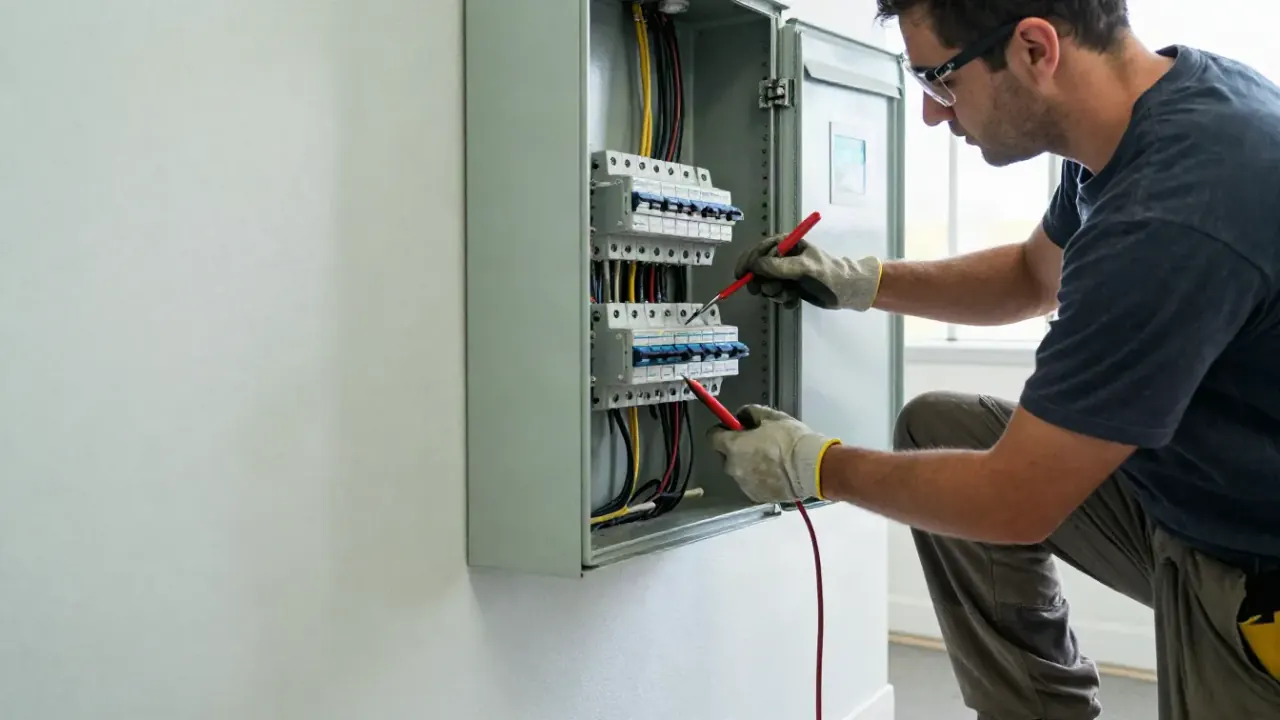
A clamp meter goes around each branch circuit while we turn loads on and off. We log real amperage, not nameplate ratings, because a 30-amp dryer rarely pulls 30 amps. This takes about 45 minutes and gives us the true demand numbers the calculation needs.
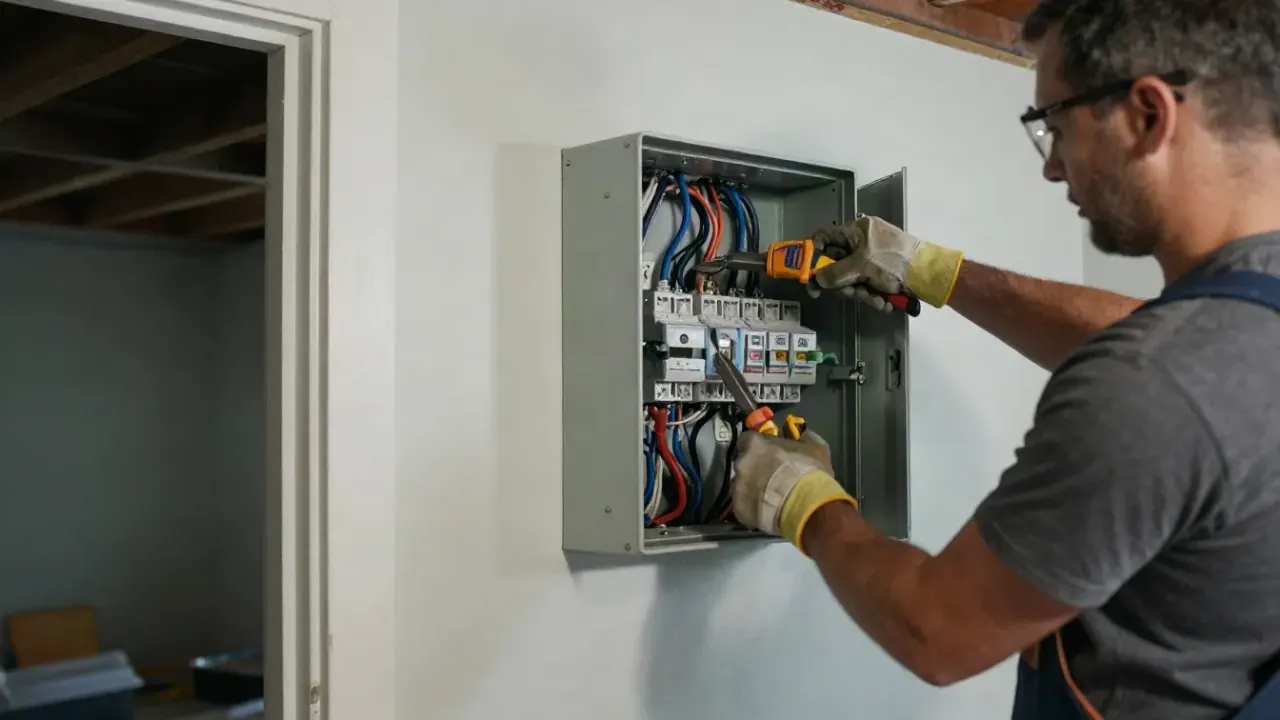
We run the numbers to NEC Article 220 and California Electrical Code, applying demand factors for ranges, dryers and EV charging. The result is a clear service size recommendation: stay at 100 amps, move to 200, or go 400 for a large EV and solar setup.
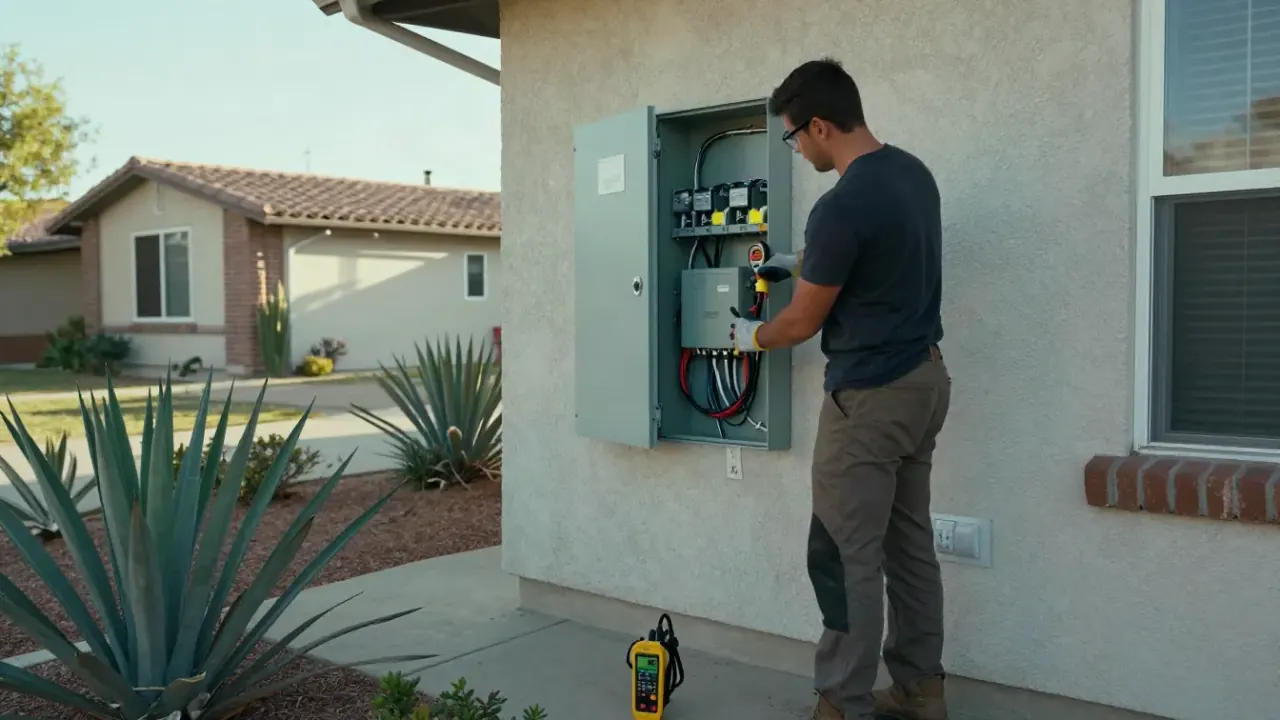
You get the calculation worksheet, a panel photo log and a plain-English summary of what we found and what we recommend. If a panel upgrade is needed, we price it the same day. No pressure, no guessing, just the numbers.
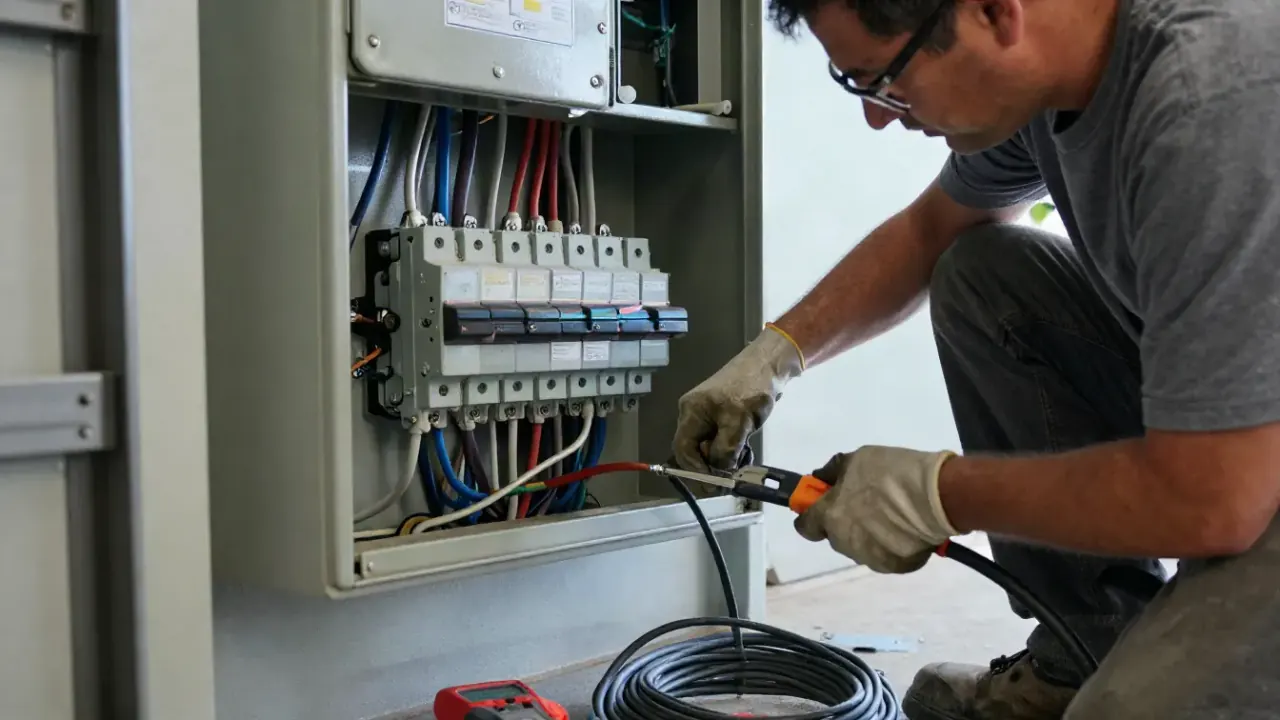
Move across a circle, or focus it and press Enter, for an illustrative thermal view of the photograph.
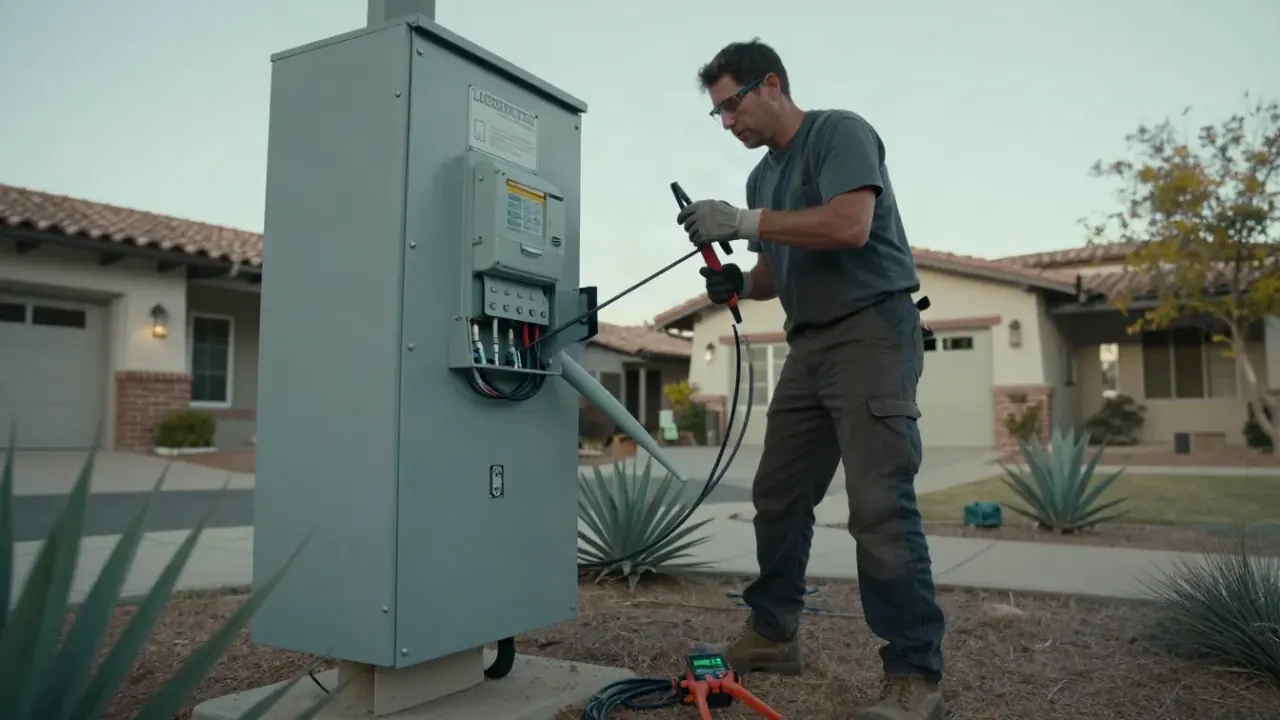
Measures real amperage on each branch circuit without disconnecting wires. This is how we log actual draw instead of trusting nameplate ratings.
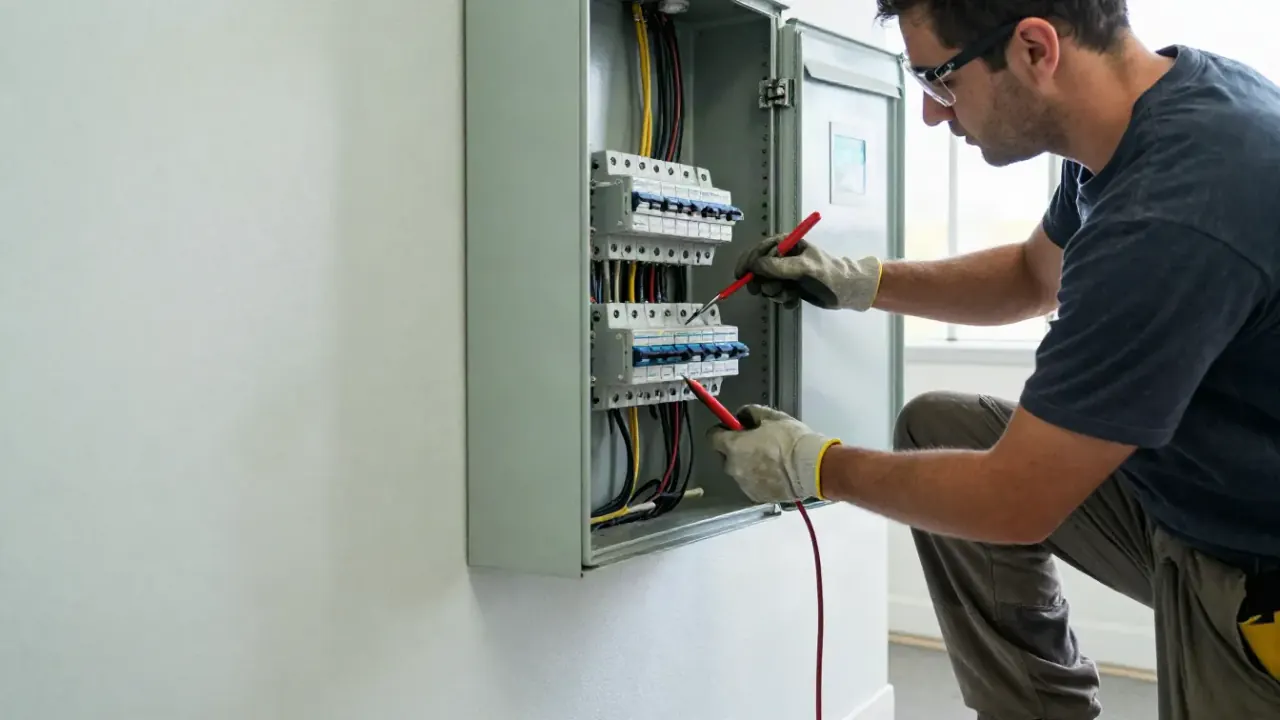
Confirms live and dead circuits before we open anything. Safety check on every panel before the dead front comes off.
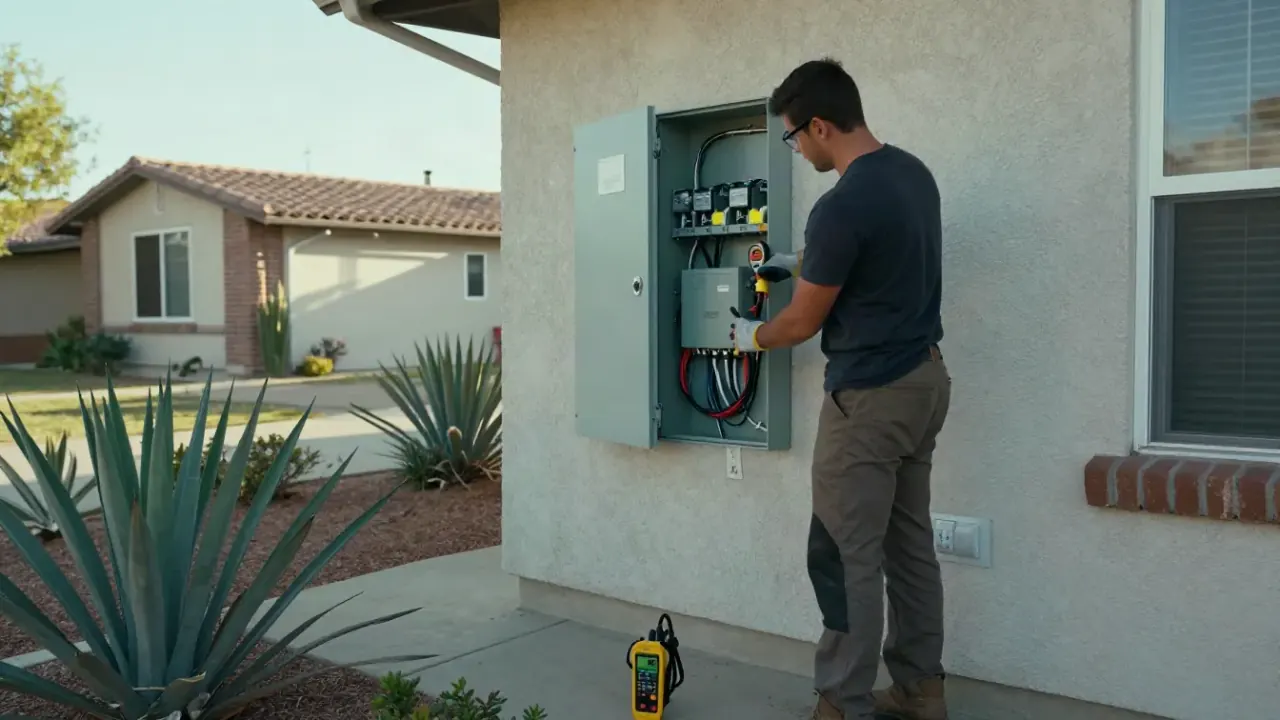
Maps unlabeled breakers to their outlets and fixtures. Older Upland panels often have handwritten or missing labels, and this fixes that.
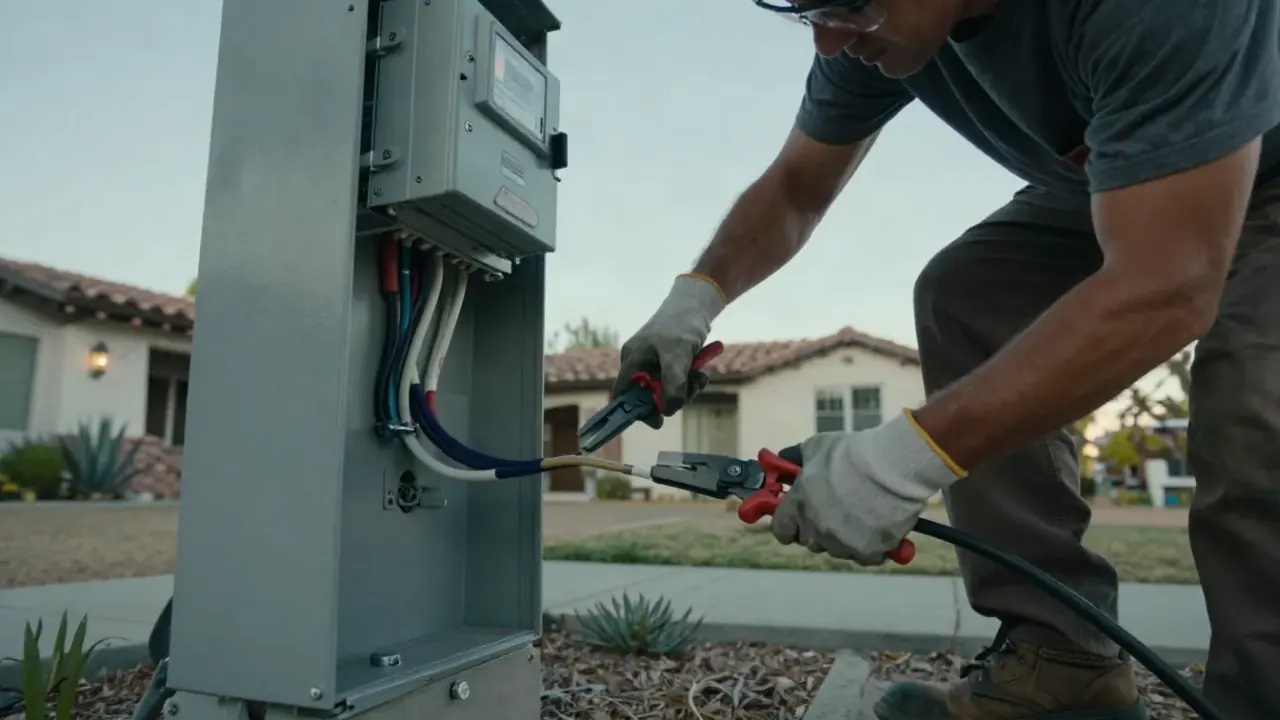
Tightens every breaker and lug to manufacturer spec. Loose lugs are a leading cause of panel heat damage and arcing.
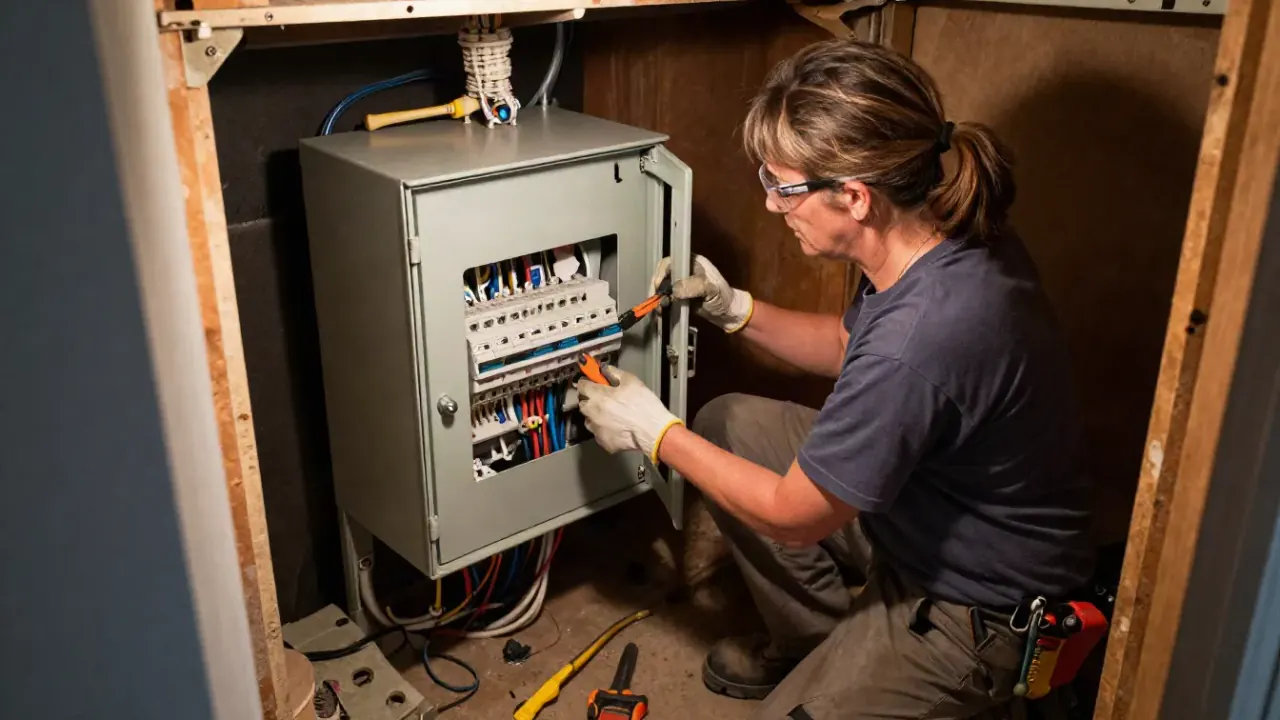
OSHA-compliant hand protection for panel work. Required on every job where the service is energized.
Thermal views are illustrative, generated from the photographs.
We relabel every circuit after testing so the next electrician, inspector or homeowner can read the panel at a glance.
The standard method for sizing services and feeders. We apply optional and standard calculations correctly, including demand factors for ranges, dryers, HVAC and EV supply equipment under NEC 220.57.
California adopts the NEC with amendments, and Upland inspectors enforce both. Our worksheets cite the code sections that apply so the permit package stands on its own.
For solar and battery projects, we check the calculation against Title 24 energy standards so the system design matches what the state expects for efficiency and load management.
Every breaker, panel and surge protective device we install carries a UL listing. We verify the listing before the part goes in, which matters when the inspector checks the label.
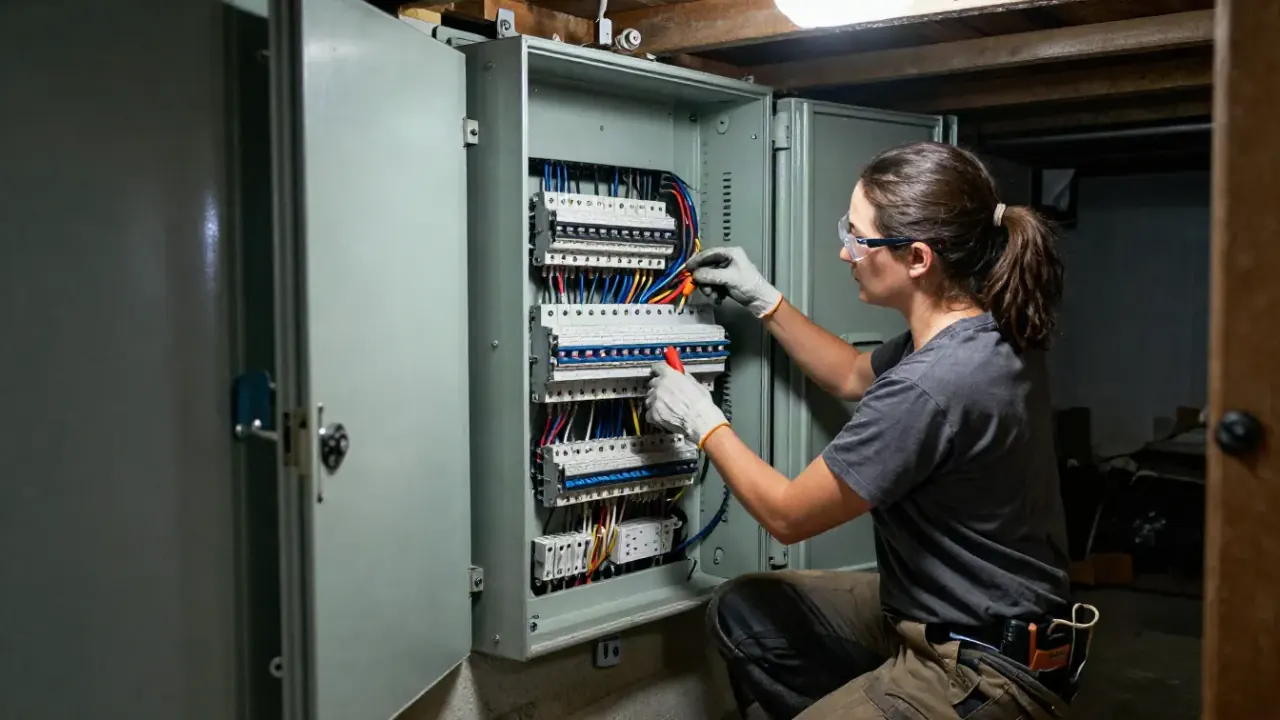
You are adding a Level 2 EV charger in your Upland garage and the permit office wants load documentation.
We test the panel, run the NEC 220.57 EV calculation and produce the worksheet Upland building officials require. If the service is short on capacity, we quote the upgrade in the same visit.
Outcome: You get a permit-ready report, a clear answer on whether your panel handles the charger, and no second trip from another contractor.
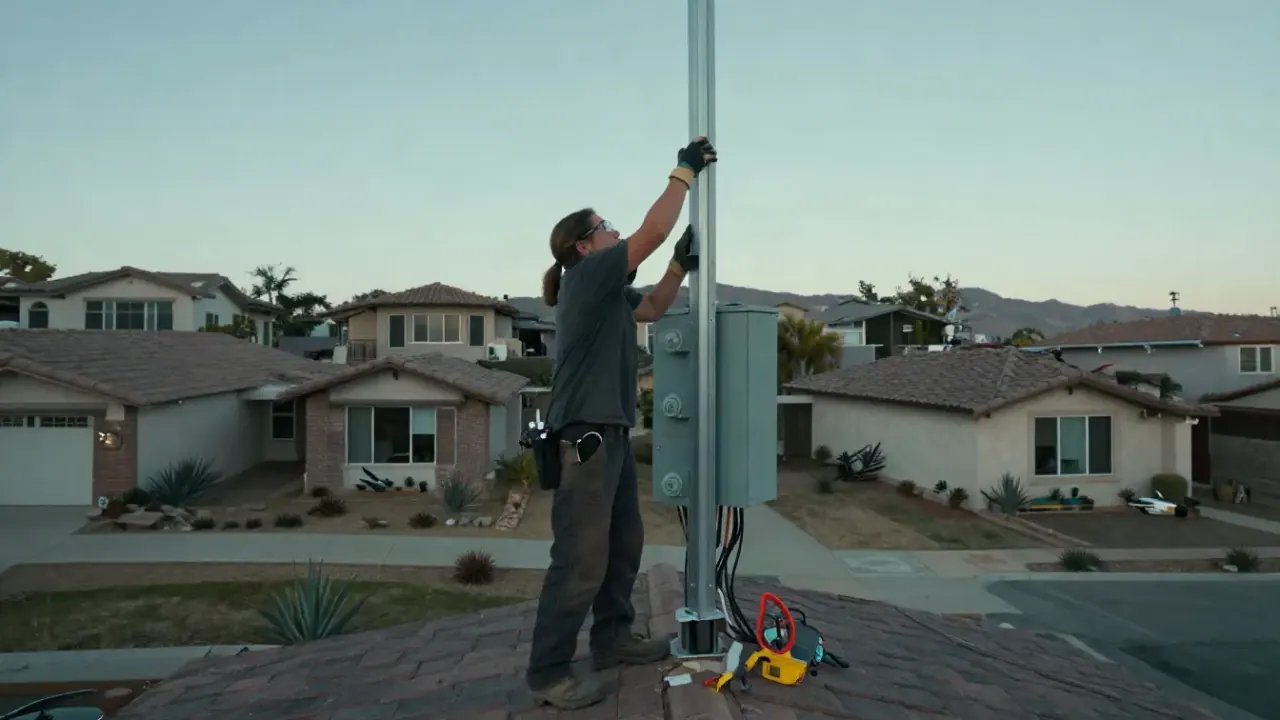
Your solar installer says the array needs a panel upgrade but you want a second opinion before spending the money.
We measure actual circuit draw, run the calculation independently and tell you the real available capacity. If the installer is right, we confirm it with numbers. If they are wrong, we say so.
Outcome: You either save thousands by keeping your existing panel or move forward on the upgrade with confidence that it is actually needed.
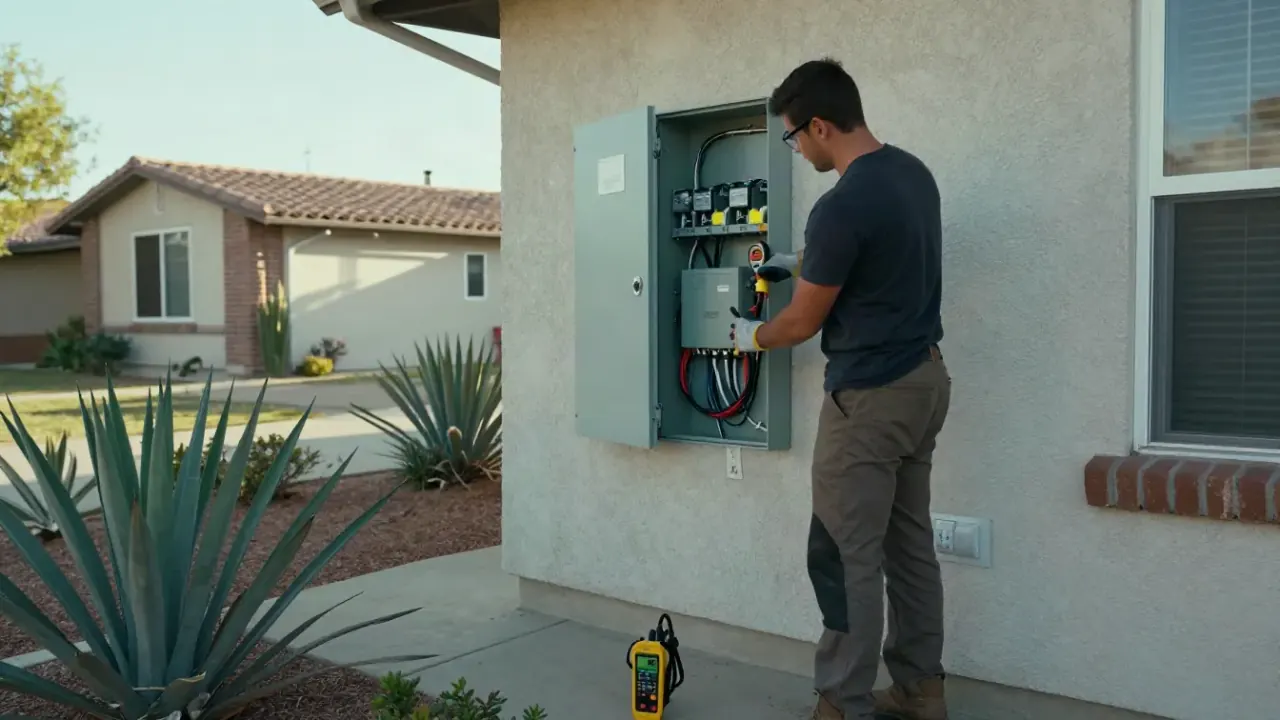
You are buying a 1960s Upland home near Historic Downtown and the inspection report flags an old fuse box.
We inspect the service, check for aluminum wiring and run the load calculation to see what the house actually needs. Then we quote the Fuse Box to Breaker Panel Conversion with the correct amperage.
Outcome: You know the true cost of making the house safe and code-compliant before you close, not after.
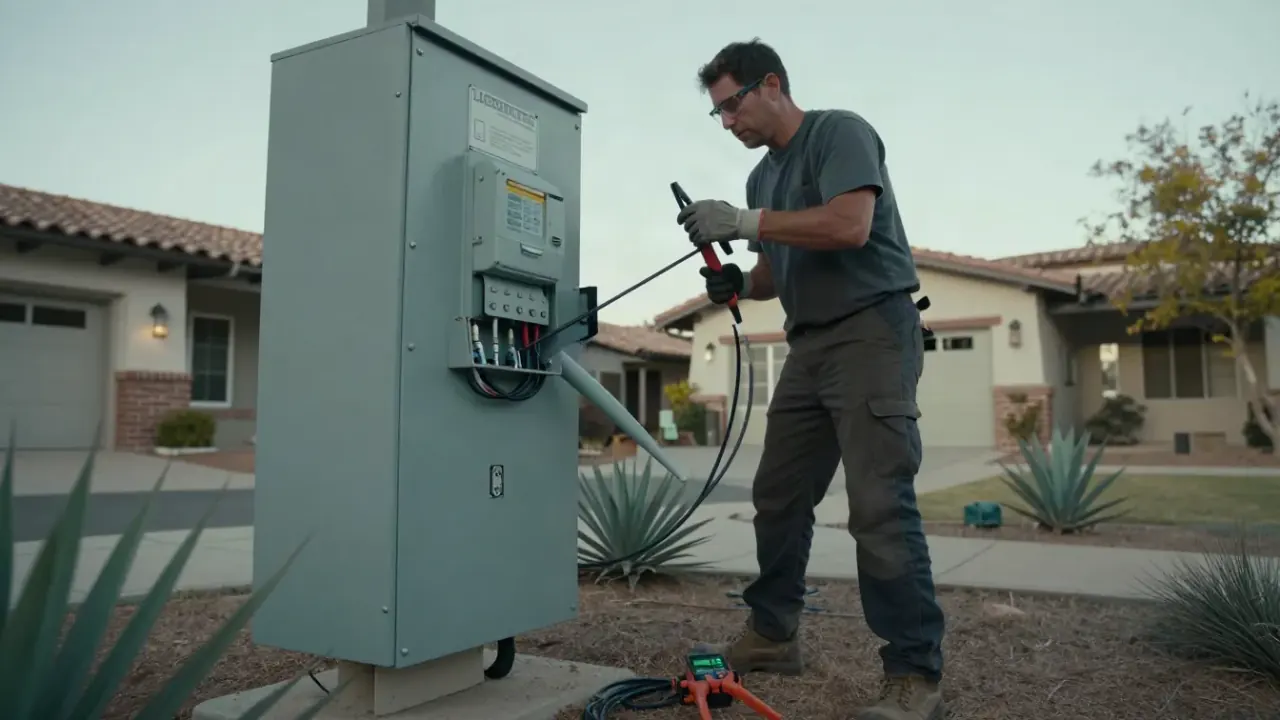
Your North Upland home keeps tripping the main breaker during summer when the AC runs all day.
We clamp the AC circuit, the range and the dryer, then run the calculation against your service size. Summer heat in Upland pushes HVAC draw to its peak, and that is usually when the math fails.
Outcome: You get a diagnosis and a fix, whether that is a breaker replacement, load balancing or a full service upgrade.
Upland sits at the base of the San Gabriel Mountains in San Bernardino County, and the housing stock shows it. You have 1920s bungalows near Historic Downtown Upland with original knob-and-tube remnants, 1950s tract homes in North Upland with 60-amp fuse boxes, and newer builds in The Colonies with 200-amp panels already close to capacity from EV chargers and pool equipment.
Summer heat pushes HVAC draw to its annual peak from June through September, which is when we get the most nuisance-tripping calls. Winter is milder, so heating load is rarely the problem. The city enforces the California Electrical Code and wants load documentation for any service change, EV charger or solar tie-in.
We also work in 91784, 91786 and 91785 daily, so we know which neighborhoods have aluminum wiring and which panels fail most often.
Before: A 1962 North Upland home had a 100-amp panel at 92 amps measured demand. The main breaker tripped every time the AC, dryer and microwave ran together, and the owner wanted to add an EV charger.
After: We installed a 200-amp Square D panel with new AFCI and GFCI breakers. Measured demand dropped to 46 amps of the new capacity, leaving room for the EV charger and a future solar tie-in.
Keep the panel label updated and have the breakers exercised once a year. We re-test amperage any time you add a large appliance so the numbers stay current.
Before: A Historic Downtown Upland home had a Federal Pacific panel that had never tripped in local experience. The inspection found scorched bus bars and two double-tapped breakers feeding the garage.
After: We replaced it with an Eaton panel sized to the calculated load, corrected the double taps with a proper subpanel feed and added whole-home surge protection. Every circuit is now labeled and AFCI-protected.
Test the AFCI and GFCI breakers monthly with the test button. Schedule an inspection every three years to check lug torque and breaker condition.
Before: A homeowner in The Colonies wanted a 9 kW solar array plus a battery, but the existing 200-amp panel had only two open breaker spaces and a 200-amp busbar already near its calculated limit.
After: We upgraded to a 400-amp service with a 400-amp busbar and installed a dedicated solar feed. The array and battery tied in cleanly, and the permit passed inspection on the first visit.
Have the solar disconnect and panel inspected annually. We re-run the load calculation whenever you add a battery or expand the array.
Most Upland panel problems start as small symptoms: a breaker that trips, a light that dims, a permit that stalls. Here is what we find and how we fix it.
You get the real numbers on your panel before you spend on an upgrade.
Upland building officials want load numbers before they approve an EV charger, solar tie-in or panel change. Our worksheet uses NEC 220.82 and Title 24 energy standards, so your permit package clears the counter the first time instead of sitting in review for weeks.
If your breaker trips every time the dryer and microwave run together, you are already over capacity. We measure actual draw on each circuit with a clamp meter and show you exactly where the overload sits, so you fix the cause instead of resetting the breaker every week.
Nobody wants to pay for a 400-amp service they do not need. The calculation tells us whether a 200-amp panel covers your EV and solar plans or whether you truly need more. That single number can save thousands on the wrong upgrade.
We open the panel and look for Federal Pacific or Zinsco failure signs, scorched lugs, double-tapped breakers and undersized aluminum wire. Those problems do not show up on a home inspection report, but they are the ones that start fires. Finding them now beats finding them at 2 a.m.
What a written scope covers and what shapes it. Prices are set by the business after the first look.
Included
Depends on
Clear records you can keep and share.
Written calculation with service size recommendation
Labeled images of panel interior and findings
Every breaker mapped and labeled
Same-day price if a panel change is needed
Two NEC methods size a service, and the right one depends on your appliances and how you use them.
Adds every load at full value with limited demand factors.
Uses demand factors for ranges, dryers and HVAC.
Applies NEC 220.57 for EV supply equipment.
A list like this tells people straight away whether you cover their street. Not listed? Call and ask: it only takes a minute.
Based in Upland and covering the places around it. Pick one for local details.
If you combine it with a panel upgrade, we credit the calculation fee toward the upgrade. Commercial calculations with multiple panels run higher because they take longer to test.
You need one any time you add a large load, because Upland permits for EV chargers, solar and panel changes require proof your service can carry it. It also tells you whether nuisance breaker tripping is a bad breaker or a maxed-out panel. Guessing leads to either a rejected permit or an overloaded service.
A typical single-family home takes two to four hours on site. Larger homes with subpanels, shops or multiple HVAC systems can run five to six hours. We schedule morning starts so the report reaches you the same afternoon, and we can often fit same-day electrical inspection Upland CA requests when the schedule allows.
Yes, that is the main reason to get one. The calculation compares your total demand against your service size. If you are at 95 amps on a 100-amp service, you need a 200 to 400 Amp Service Upgrade before adding an EV charger. If you are at 60 amps, your existing panel is fine and we will tell you so.
Other services from the same team.
One visit gives you the real numbers on your panel, a written calculation and a clear recommendation. Call now and we will schedule your inspection.
Call or email with your address and what the panel is doing, and we will tell you what the job likely involves. We answer calls Monday through Friday, 8am to 6pm, and return messages from Upland, Rancho Cucamonga, and Ontario the same business day. For dead panels and burning smells, say so on the call.